Originally published: · Last updated:
This article has been substantially revised with an expanded episode summary, fact-checked details, video chapter links and related resources for laboratory leaders.
The Lab Entrepreneur Podcast — Episode 02
What does sustainable lab growth look like for an independent diagnostic laboratory? In this episode of The Lab Entrepreneur, MEDFAR CEO and co-founder Elias Farah speaks with Alex Alvarez, CEO and founder of Helix Diagnostix, about building a laboratory through responsive customer service, fast results and a clear understanding of operations and billing.
Watch the episode: building and growing Helix Diagnostix
Prefer another format? Watch on YouTube or listen on Spotify.
Use these chapter links to jump to the topics most relevant to your laboratory:
- 3:01 — Starting Helix Diagnostix
- 4:07 — Growth and expansion
- 6:05 — Staffing and customer service
- 12:14 — AI and laboratory automation
- 15:11 — Laboratory operations and KPIs
- 18:23 — Leadership and industry perspectives
From laboratory billing to independent lab ownership
Alex began his career in revenue cycle management before moving into laboratory operations. That experience gave him a view of the full business process, from a specimen arriving at the lab to a claim being adjudicated. In 2020, he and a business partner launched Helix Diagnostix with their own funding.
During the April 2025 episode, Alex describes starting with three laboratory instruments and about four employees. Five years later, he reports more than 11 instruments and a team of roughly 20 people, serving providers across multiple states.
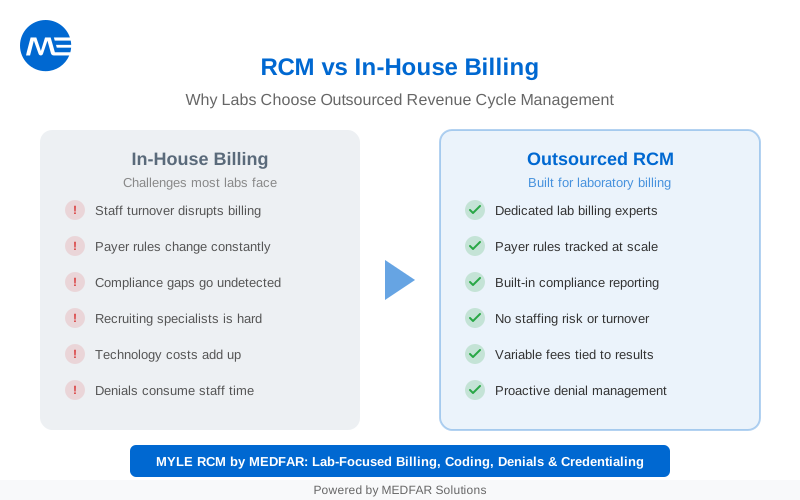
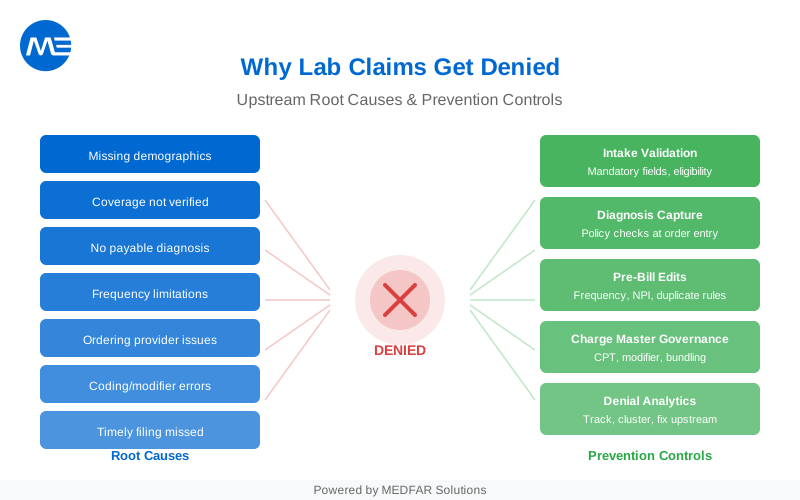
For aspiring lab owners, his story highlights the value of understanding both testing operations and reimbursement. As you plan that foundation, explore laboratory revenue cycle management with MYLE RCM.
Customer service and turnaround time as drivers of lab growth
Alex identifies two priorities behind Helix’s approach: responsive customer service and fast results. He describes the importance of answering calls, replying promptly to emails and giving providers access to someone who can discuss a result or a testing timeline.
Turnaround time connects that service experience to the work of the laboratory. The conversation explains why timely results matter to providers making care decisions, and why communication becomes especially important when a result is delayed or needs clarification.
Alex also discusses the difficulty of joining payer networks and finding clients whose needs align with the laboratory’s network status. He presents this as a challenge his business faced at the time of the interview. For lab leaders, the discussion is a reminder to consider payer participation and client fit alongside service quality when planning growth.
Measure laboratory turnaround time by test
One of the most concrete operational examples is Helix’s turnaround-time report. Alex says the team reviews it almost daily, tracking the interval between specimen receipt and reporting, with visibility into average turnaround time for individual tests.
That detail helps the team identify opportunities to improve a process and coach staff. A lab-wide average alone can hide differences between workflows; reviewing performance by test gives leaders a more useful starting point for investigating delays.
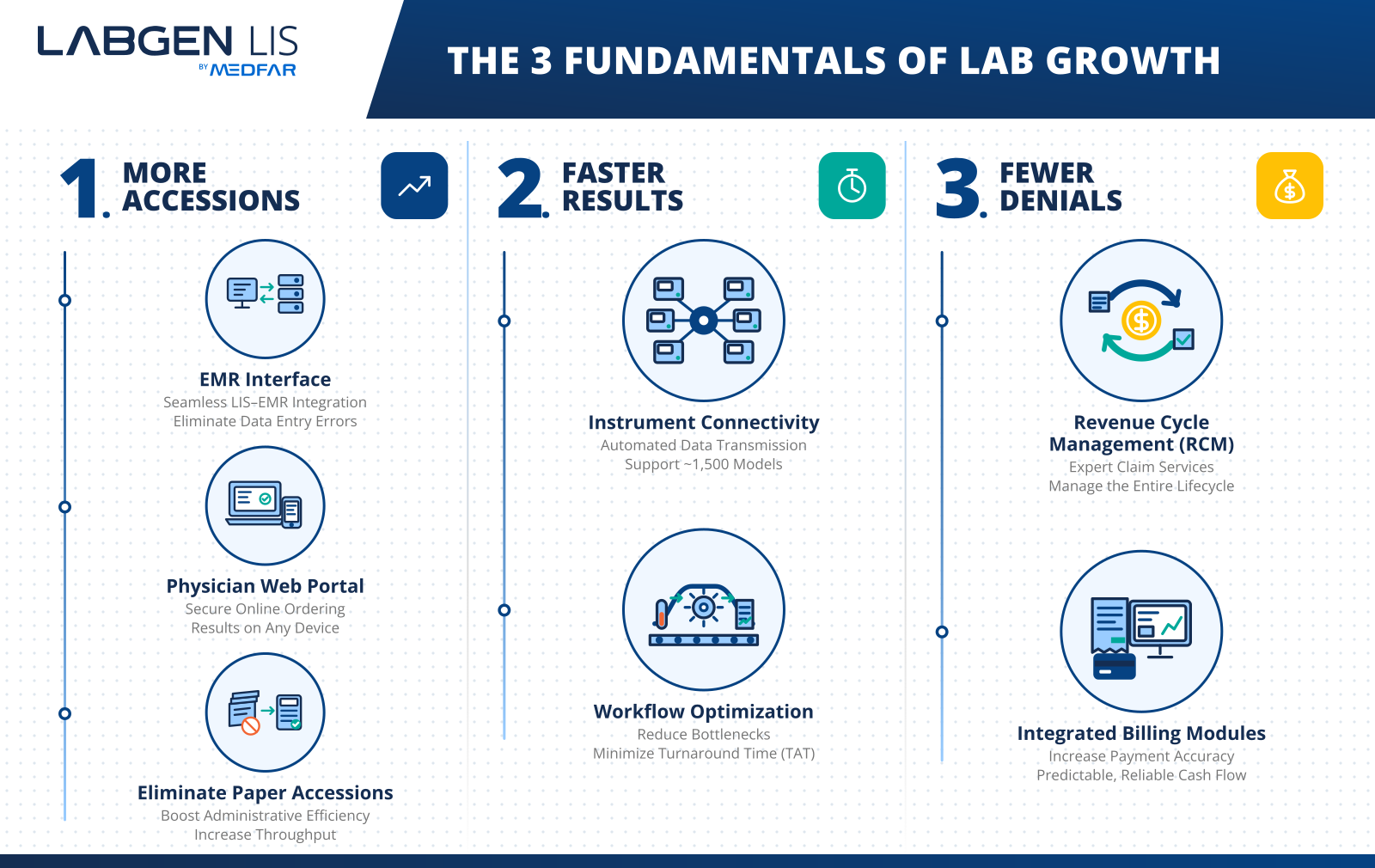
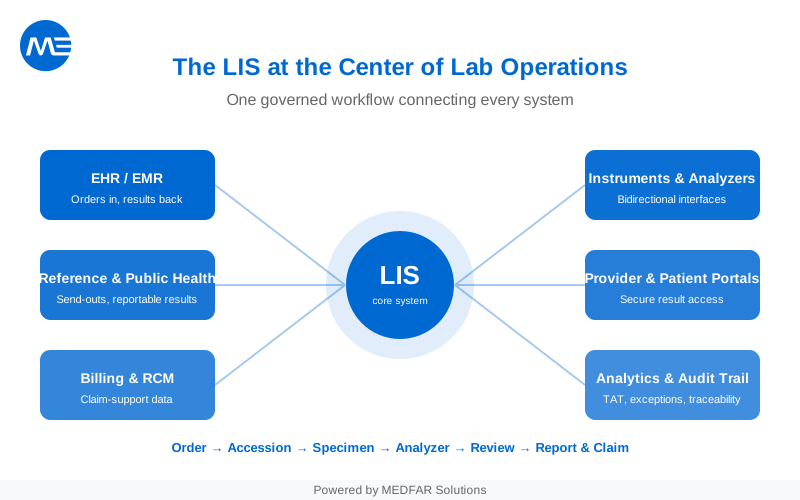
For laboratories evaluating their reporting tools, see how a laboratory information system (LIS) supports the sample journey from ordering through results and performance reporting.
Use AI and automation while keeping people accessible
Alex sees opportunities for technology to reduce manual work, including emerging robotics for specimen handling and labeling. He also discusses using analytical tools to understand testing activity and focus resources.
He distinguishes those opportunities from replacing every customer interaction with an automated response. His emphasis is on a balance: use technology to improve workflows while giving clients a person they can reach when they need help.
Build a team that contributes to continuous improvement
Hiring and communication are recurring themes in the interview. Alex looks for work ethic and preparation during recruitment, and describes an environment where employees can share suggestions about how the laboratory operates.
He explains that managers meet with their teams daily, with broader weekly meetings involving leadership. Those conversations give staff a way to raise issues and contribute ideas as the business expands.
For owners preparing for their next stage of growth, the discussion connects staffing decisions with day-to-day execution. Explore LABGEN LIS for established laboratories to learn about software designed to support expanding operations.
About Alex Alvarez and Elias Farah
Alex Alvarez is CEO and founder of Helix Diagnostix, a Florida-based diagnostic laboratory. His background spans revenue cycle management and laboratory operations. Connect with Alex on LinkedIn.
Elias Farah is CEO and co-founder of MEDFAR and host of The Lab Entrepreneur, a podcast featuring people building and leading businesses in the laboratory industry. Connect with Elias on LinkedIn.
Explore the next step for your laboratory
Watch the episode for Alex’s account of starting Helix, serving providers and building a team. If the discussion raises questions about your own workflows or billing processes, contact MEDFAR to discuss LABGEN LIS or MYLE RCM.