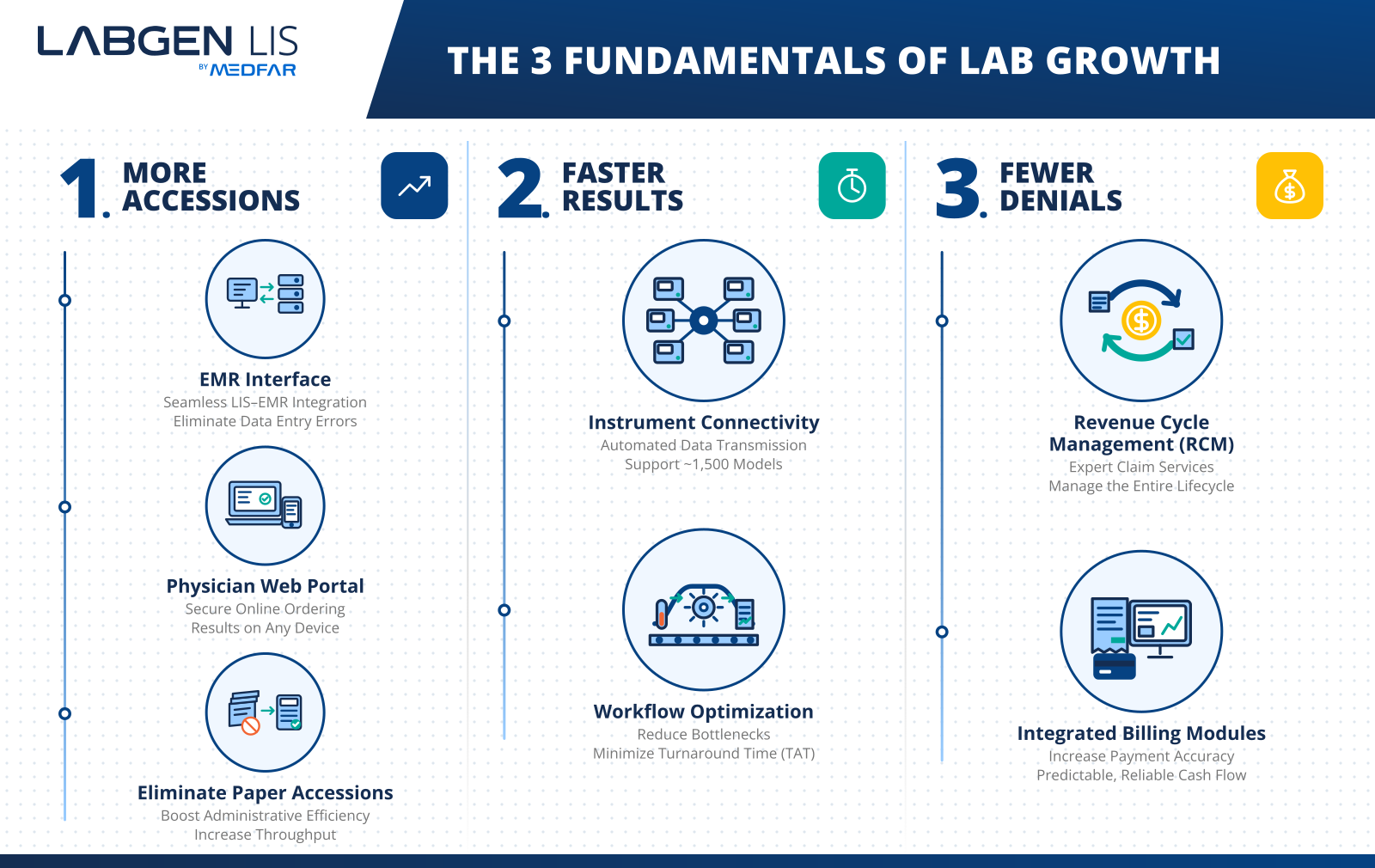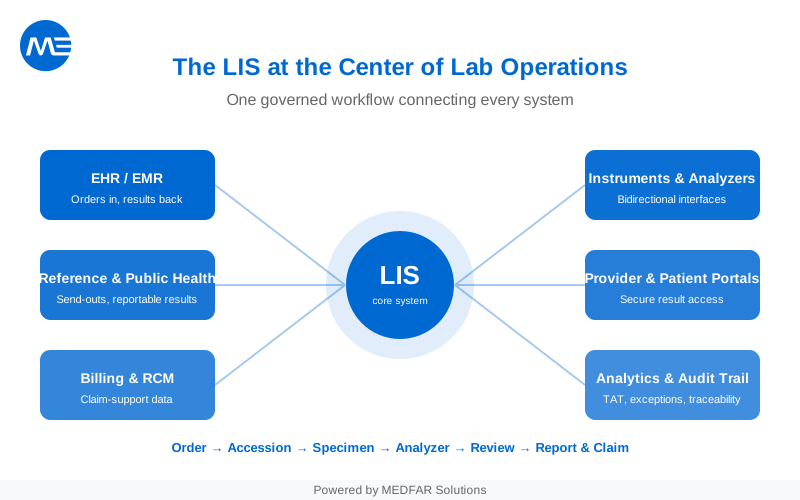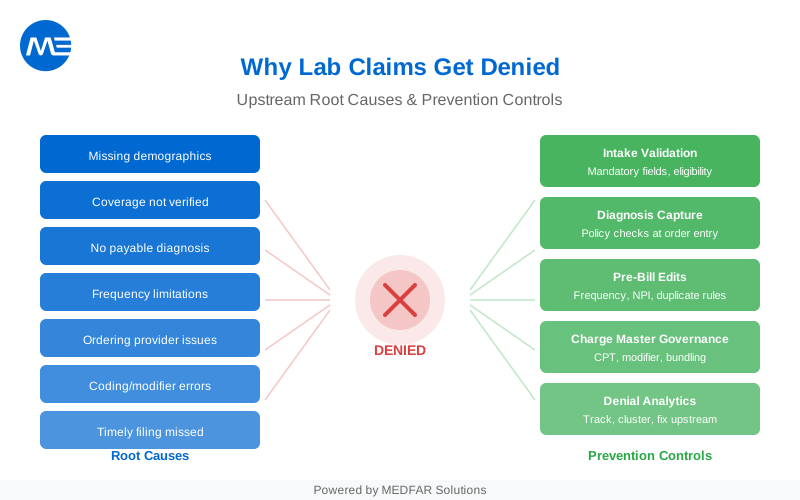
Denials drain cash and time. Appeals feel like whack-a-mole. The good news: many are predictable. If you fix order data and documentation upstream, denials drop downstream.
Denials Start Before the Claim Exists
A denial is the payer’s way of saying “this claim didn’t meet our rules.” The mistake usually happened earlier: missing order details, incomplete insurance data, or documentation gaps.
Upstream touchpoints that commonly create downstream denials:
- Client onboarding (payer rules, client billing instructions, ordering patterns).
- Order entry (diagnosis capture, consent workflows, prior auth where applicable).
- Accessioning (demographics, insurance ID, duplicates, referring provider details).
- Test catalog and charge master alignment (codes, panels, modifiers).
- Pre-bill review (edits, claim scrubbing, and coverage checks).
Treat denial prevention as process design, not a billing clean-up task.
Medical Necessity and Documentation Drive Coverage Decisions
For many payers, “medical necessity” lives in documentation and policy. CMS’s Medicare Program Integrity Manual discusses the importance of documentation to demonstrate medical necessity and notes that inadequate documentation can create claim liability (see Medicare Program Integrity Manual).
CMS also publishes guidance on medical record documentation and common error patterns through the Medicare Learning Network (see MLN909160: Complying with Medical Record Documentation Requirements).
Operational implication: build order workflows that capture the diagnosis and ordering context needed for coverage determinations. Don’t rely on “we can appeal later.”
The Top 10 Denial Root Causes Map to Upstream Controls
Denial reason codes help, but only if you translate them into root causes your team can control.
| Root Cause (Upstream) | Denial Symptom | Upstream Prevention Control |
|---|---|---|
| Missing/invalid demographics | Payer can’t match member | Front-end validation + mandatory fields at intake |
| Coverage not verified | Wrong plan or non-covered benefit | Eligibility check before processing |
| No payable diagnosis / medical necessity gap | “Not medically necessary” or no covered ICD | Capture diagnosis at order; use policy checks |
| Frequency limitations | Frequency edit denials | Frequency-aware edits + documentation for repeats |
| Ordering provider issues | Invalid or missing NPI | Validate NPI and ordering requirements |
| Coding/modifier errors | Incorrect CPT/modifier or bundling | Charge master governance + claim edits |
| Duplicate billing | Duplicate claim denial | Duplicate detection rules before submission |
| Timely filing missed | Filed after payer deadline | Billing cadence + aging alerts |
| Missing documentation/signature | Documentation not compliant | Order documentation capture + signature checks |
| Payer-specific policy mismatch | Special criteria not met | Client guidance + payer rule library |
For labs billing Medicare, policy and billing instructions live in CMS manuals. Chapter 16 of the Claims Processing Manual includes clinical laboratory billing guidance (see Medicare Claims Processing Manual, Chapter 16).
Order Intake Needs a Minimum Data Set
Define a “minimum viable order.” If the order doesn’t meet the minimum, hold it and fix it. Otherwise you push work into billing rework and denials.
| Field | Why It Matters | Where to Validate |
|---|---|---|
| Patient full name + DOB | Member matching and identity | Order entry + accessioning |
| Member ID + payer | Eligibility and payer routing | Eligibility step |
| Ordering provider name + NPI | Ordering attribution and rules | Provider directory + NPI validation |
| Performing site / CLIA info (if applicable) | Correct billing entity | Billing configuration |
| Diagnosis / ordering reason (when required) | Medical necessity and coverage | Order form, EMR interface, portal |
| Specimen collection date/time | Timeliness and some coverage rules | Interface mapping + manual validation |
| Client account + billing instructions | Billing splits and statements | Client setup controls |
| Consent/financial notice flag (when applicable) | Patient financial notice when coverage is uncertain | Intake workflow |
Keep the checklist enforced. A “soft” checklist is a suggestion, not a control.
Pre-Bill Edits and Denial Analytics Close the Loop
Edits prevent errors you already understand. Analytics find the errors you don’t. Use both.
High-yield edits to implement early:
- Missing demographic/insurance fields stop-ship edit.
- Invalid NPI or missing ordering provider stop-ship edit.
- Duplicate claim detection by patient + date of service + test.
- Frequency-aware edits for tests with repeat limitations (payer-specific).
- Diagnosis-required edit for tests/payers that enforce coverage policy.
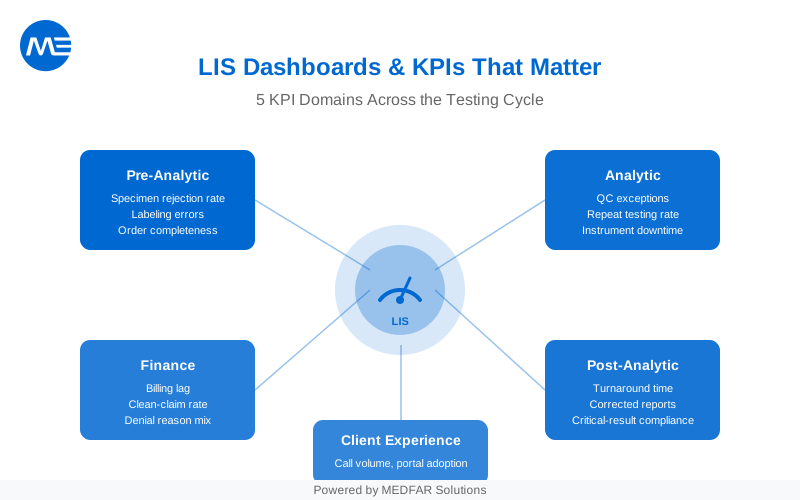
Then track denials by payer, client, test, and ordering location. Look for clusters. Fix the upstream workflow that created the cluster.
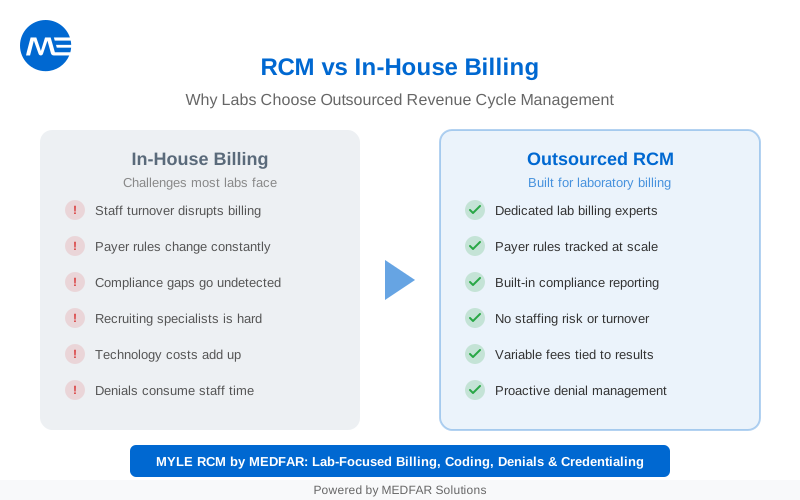
If you need help operationalizing denial management, MEDFAR describes lab-focused RCM support (billing, coding, denial management, credentialing) here: MYLE RCM.
A Compliance Program Reduces Recurring Risk
Denials are a financial signal and a compliance signal. Repeated denials for the same reason can indicate weak controls, inconsistent ordering practices, or policy misunderstandings.
The HHS Office of Inspector General publishes compliance guidance for clinical laboratories, including risk areas like billing and handling overpayments (see OIG Compliance Program Guidance for Clinical Laboratories).
Use that guidance to prioritize internal audits and staff training. Prevention is cheaper than investigation.
FAQ
Do LCDs matter for lab testing?
Often, yes for Medicare. LCDs and payer policies can define diagnosis and documentation expectations. Build policy checks into intake and pre-bill workflows.
What documentation should we keep to defend claims?
Keep what supports the billed service and medical necessity in the patient record and order documentation. CMS highlights compliant and supportive documentation as a recurring risk area (see MLN909160).
Are denials always billing’s problem?
No. Many denials are created at ordering and accessioning. Billing can’t fix missing diagnosis context after the fact without rework and delay.
What’s the first denial metric to track?
Start with denial reason mix by payer and by client. It shows where to focus your first upstream controls.