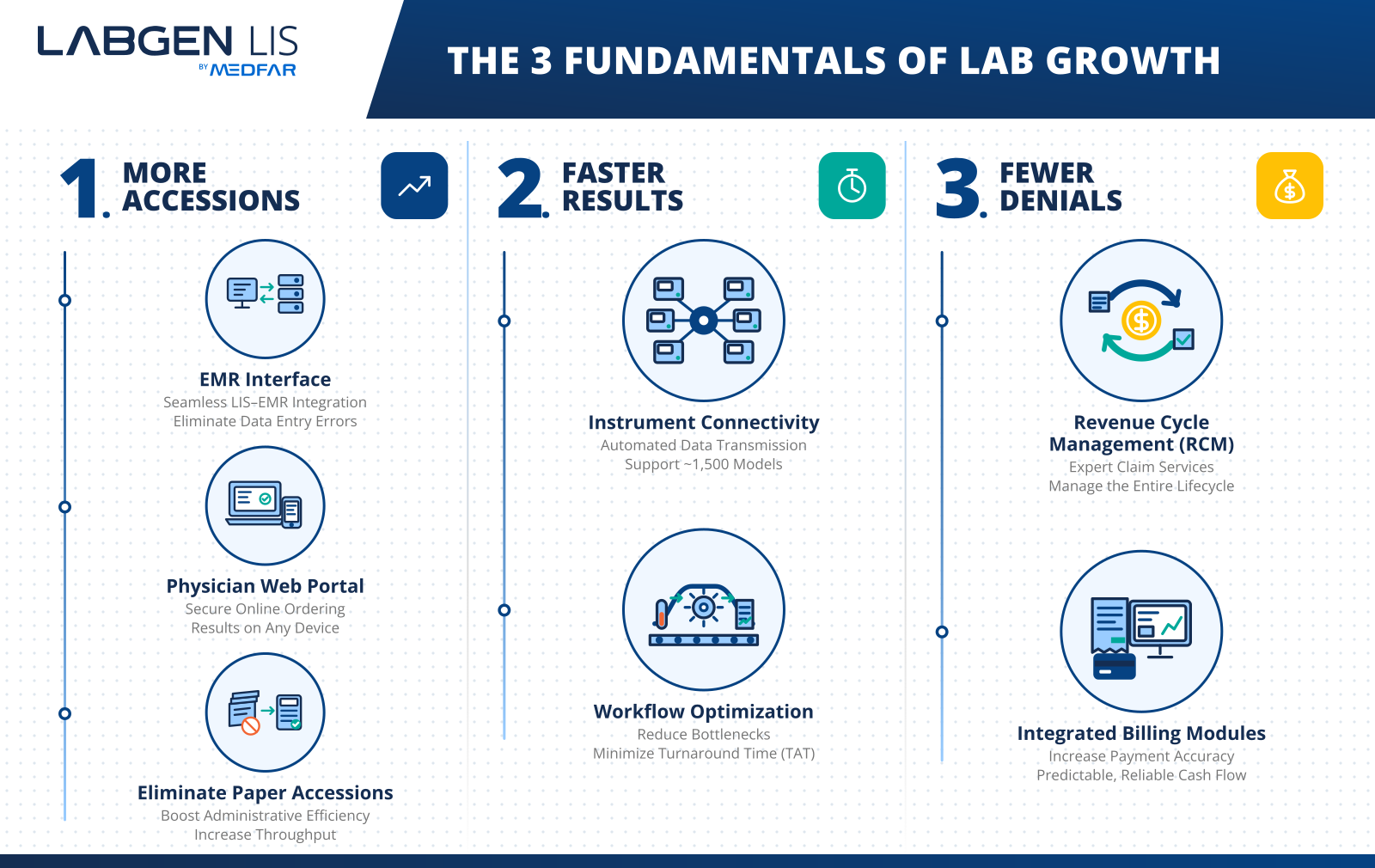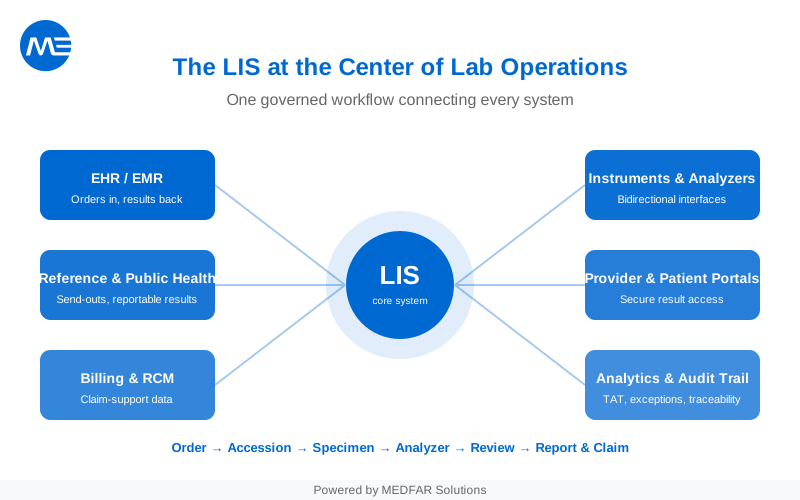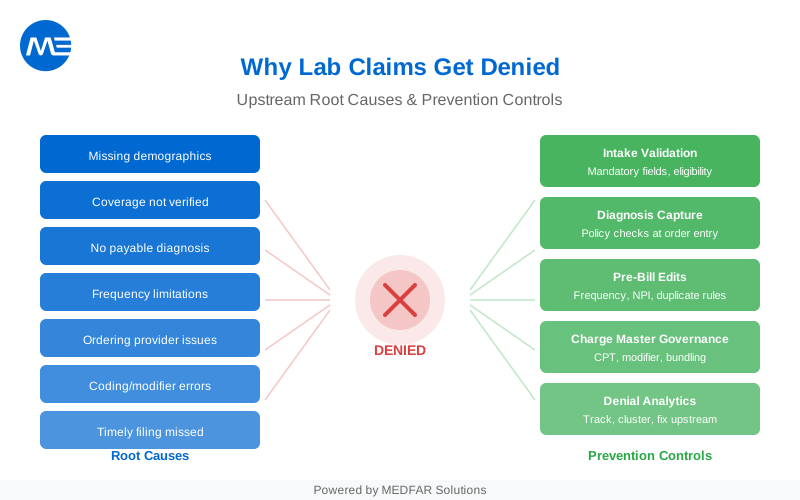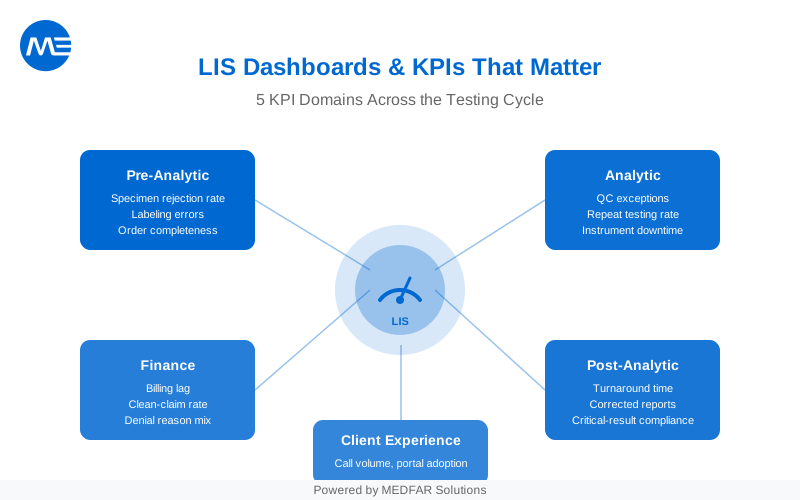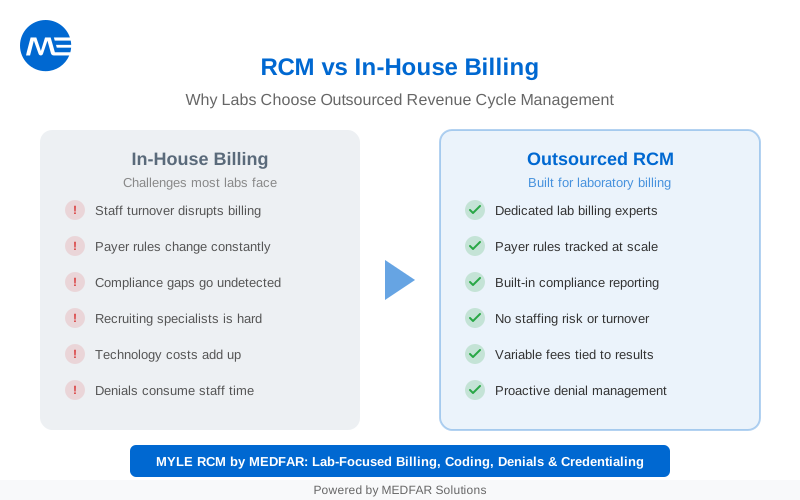
Revenue cycle is a system. You can try to run it internally – or you can partner with experts who do it every day. For most labs, partnering with a dedicated RCM provider is the smarter path to faster collections, fewer denials, and stronger compliance.
Revenue Cycle Choices Affect Compliance and Cash
Revenue cycle management (RCM) covers the steps from patient and order data capture through claim submission, payment posting, denials, and follow-up. Billing choices shape both cash flow and compliance exposure.
HHS-OIG’s General Compliance Program Guidance outlines expectations for effective compliance infrastructure across healthcare entities (see HHS-OIG GCPG 2023).
At the claim level, CMS emphasizes accurate and supportive medical record documentation as a recurring risk area (see MLN909160).
Bottom line: the compliance burden is real and growing. A specialized RCM partner can shoulder the operational complexity while you retain governance over data and documentation. Trying to build all of this in-house is costly, slow, and exposes your lab to avoidable risk.
In-House Billing Demands More Than Most Labs Can Sustain
In-house billing can work, but only when your lab meets a high bar of operational maturity. In practice, few labs maintain this consistently, and the hidden costs of turnover, payer complexity, and compliance gaps add up quickly.
In-house billing requires all of the following and if any one element is missing, performance suffers:
- You have documented SOPs for intake, coding rules, and denial handling.
- Order data quality is consistently high, with few billing holds.
- You can recruit and retain experienced lab billing staff.
- You can maintain payer-specific rule updates and training.
- You can invest in tools for edits, reporting, and audit trails.
The reality: most labs struggle to meet these requirements consistently. Staff turnover disrupts institutional knowledge, payer rules change faster than internal teams can track, and a single compliance gap can cost more than years of outsourced RCM fees. The perceived control of in-house billing often comes at the expense of financial performance and risk exposure.
Outsourced RCM Delivers Expertise, Scale, and Predictability
For labs facing payer complexity, denial pressure, or staffing challenges—which describes the majority of the market—outsourced RCM is the most effective way to improve collections, reduce denials, and maintain compliance without building a costly internal operation from scratch.
A dedicated RCM partner gives your lab an immediate advantage when:
- Your payer mix is diverse and policy changes are frequent.
- Denials and appeals consume disproportionate staff time.
- You are opening new sites or scaling volume rapidly.
- You need help with credentialing and enrollment workflows.
- You want predictable service levels with measurable reporting.
Whatever the model, compliance expectations remain. OIG’s clinical laboratory guidance highlights billing and reimbursement as key risk areas labs should address in compliance programs (see OIG Compliance Program Guidance for Clinical Laboratories).
MEDFAR’s MYLE RCM was built specifically for laboratories. It combines billing, coding, denial management, and credentialing into a single service designed to integrate with your LIS and deliver measurable results from day one. Learn how MYLE RCM can improve your lab’s financial performance:MYLE RCM.
A Scoring Matrix Makes Tradeoffs Explicit
A scorecard turns a subjective debate into a documented decision. Use a 1–5 score (low to high) and weight what matters most for your lab.
| Category | What to Evaluate | Example Weight |
|---|---|---|
| Cost structure | Fixed payroll vs variable fees; tooling costs | 20% |
| Speed to competency | Time to build or scale a working team | 15% |
| Payer expertise | Knowledge of payer rules, edits, appeals | 15% |
| Data transparency | Access to reports, work queues, and audit trails | 15% |
| Compliance governance | Policies, monitoring, and corrective actions | 15% |
| Integration readiness | How well LIS and order data flow into billing | 10% |
| Business continuity | Coverage for vacations, turnover, and surges | 10% |
Run the scorecard for in-house, outsource, and hybrid models. In most evaluations, outsourced RCM scores higher on payer expertise, speed to competency, and business continuity—the categories that directly protect cash flow. Labs that keep governance internal while partnering with a dedicated RCM provider for billing, denials, and credentialing get the best of both worlds.
Contract Terms and Reporting Determine Real Performance
If you outsource, the contract and reporting define whether you actually gain control or lose it. Write requirements in plain language, not marketing terms.
| Requirement | What You Should Ask For | Why It Matters |
|---|---|---|
| Clean-claim definition | How ‘clean’ is measured and by which payer responses | Prevents metric games |
| Denial taxonomy | Standard denial categories + mapping to payer codes | Makes root-cause fixes possible |
| Aging views | A/R aging by payer, client, and test category | Shows cash-flow risk |
| Work queue visibility | Read-only access to queues and notes | Supports oversight and audits |
| Appeals process | Timelines, templates, and escalation paths | Controls revenue leakage |
| Audit rights | Right to audit processes and samples | Supports compliance governance |
| Data ownership | Your ownership of claim and remittance data | Prevents lock-in |
Tie reporting back to documentation expectations. CMS highlights documentation as a common error driver, so your billing model must be able to surface documentation gaps that drive denials (see MLN909160).
Governance Stays with You—Execution Can Be Outsourced
Governance is what keeps billing from becoming reactive—and it’s the one piece you should always own internally. The good news: a strong RCM partner makes governance easier by providing the data, denial analytics, and compliance reporting you need to make informed decisions. You set the standards; they execute at scale.
A practical governance checklist, aligned with OIG’s emphasis on compliance infrastructure:
- Document billing and coding policies, then train and retrain.
- Monitor denial trends and investigate root causes monthly.
- Audit a sample of claims for documentation support and correctness.
- Track overpayments and refunds with a defined response process.
- Review client ordering patterns for outliers and address them early.
When you pair strong internal governance with a lab-focused RCM partner like MYLE RCM, you get the best outcome: expert execution with full oversight and accountability.
FAQ
Is outsourcing always cheaper than in-house billing?
When you factor in the true costs of in-house billing—recruiting, training, turnover, technology, payer rule maintenance, and compliance overhead—outsourced RCM is often the more cost-effective choice. It converts unpredictable fixed costs into variable fees tied to performance, and a good RCM partner reduces denials and accelerates collections in ways that more than offset the service fee.
What should we keep internal even if we outsource?
Keep governance and data quality ownership internal: client setup rules, minimum order requirements, and oversight of denial root causes. Outsource everything else—billing execution, denial follow-up, credentialing, and appeals—to a partner with lab-specific expertise. This model gives you full control without the operational burden.
How do we evaluate an RCM partner’s compliance maturity?
Look for a partner built specifically for laboratories—not a generic medical billing company. Ask how they align with OIG compliance guidance, what monitoring and reporting they provide, and what audit rights you retain. MYLE RCM, for example, was designed around lab workflows and compliance requirements from the ground up (seeHHS-OIG GCPG 2023).
What’s the first KPI to require in an RCM contract?
Start with denial reason mix and turnaround time from result finalization to claim submission. Those two measures link directly to upstream controls and cash flow. A strong RCM partner like MYLE RCM will proactively report on both and drive continuous improvement.