Originally published: · Last updated:
This article has been substantially revised with a restructured episode summary, fact-checked details, video chapter links and additional resources for laboratory leaders.
The Lab Entrepreneur Podcast — Episode 01
Scaling a laboratory requires a clear service promise, a team that can deliver it and operations that keep pace with demand. In Episode 01 of The Lab Entrepreneur, Adam El Hosseiny, introduced as COO of Access Medical Lab, joins MEDFAR CEO and co-founder Elias Farah to explain how a family business in Jupiter, Florida, expanded its reach across the United States.
The conversation covers customer acquisition, laboratory automation, daily KPIs and leadership through difficult decisions. Adam also shares how his early work in accessioning, customer service, billing and sales shaped his approach to operations. His experiences and growth figures below reflect the business as discussed in the 2025 interview.
Watch the episode with Adam El Hosseiny
Watch on YouTube or find The Lab Entrepreneur on Spotify. Use the chapter links to jump to a topic:
- 0:57 — The family background and early days
- 2:18 — Challenges and growth of Access Medical Lab
- 3:06 — Adam’s journey to COO
- 6:10 — Customer acquisition and business strategy
- 15:25 — Market trends and industry challenges
- 18:55 — Leadership and future vision
- 29:37 — Advice for laboratory entrepreneurs
Start with a service gap your laboratory can solve
Access Medical Lab was founded in 2003 by Adam’s parents and oldest brother. After working in hospital laboratories in New York, his parents moved to Florida and saw an opportunity to offer a different experience to local physicians and patients.
Adam describes the original offer around three priorities: faster results, responsive service and a better blood-draw experience. The founders used their own funds to launch the laboratory when outside investment was difficult to secure.
His advice to new lab owners returns to that starting point: identify a need in your community and explain the value your laboratory will bring. A clear offer gives prospective clients a reason to choose you and gives your team a service standard to work toward.
Connect customer feedback to laboratory operations
Adam joined the family business in 2004, taking on entry-level tasks such as data entry, accessioning and answering calls. Over time, he worked in billing, courier services and sales before moving into operations and becoming COO during the COVID-19 period.
Sales exposed him to what clients needed and where the operation fell short. When physicians called with concerns, he could connect their experience to the processes behind it. That perspective helped him bridge customer relationships and laboratory execution.
Access’s approach to winning and retaining clients, as Adam describes it, starts with listening to physicians. He encourages lab owners to treat complaints as constructive feedback and use them to improve service. For a growing laboratory, that means keeping client feedback connected to the people who can act on it.
Three priorities for scaling a laboratory
Adam identifies a turning point in 2017, when Access sold its regional South Florida book of business to LabCorp and shifted its focus toward nationwide expansion. The change required a different marketing approach, branding and sales pitch. In the interview, he reports that the business grew approximately tenfold over six years following that shift.
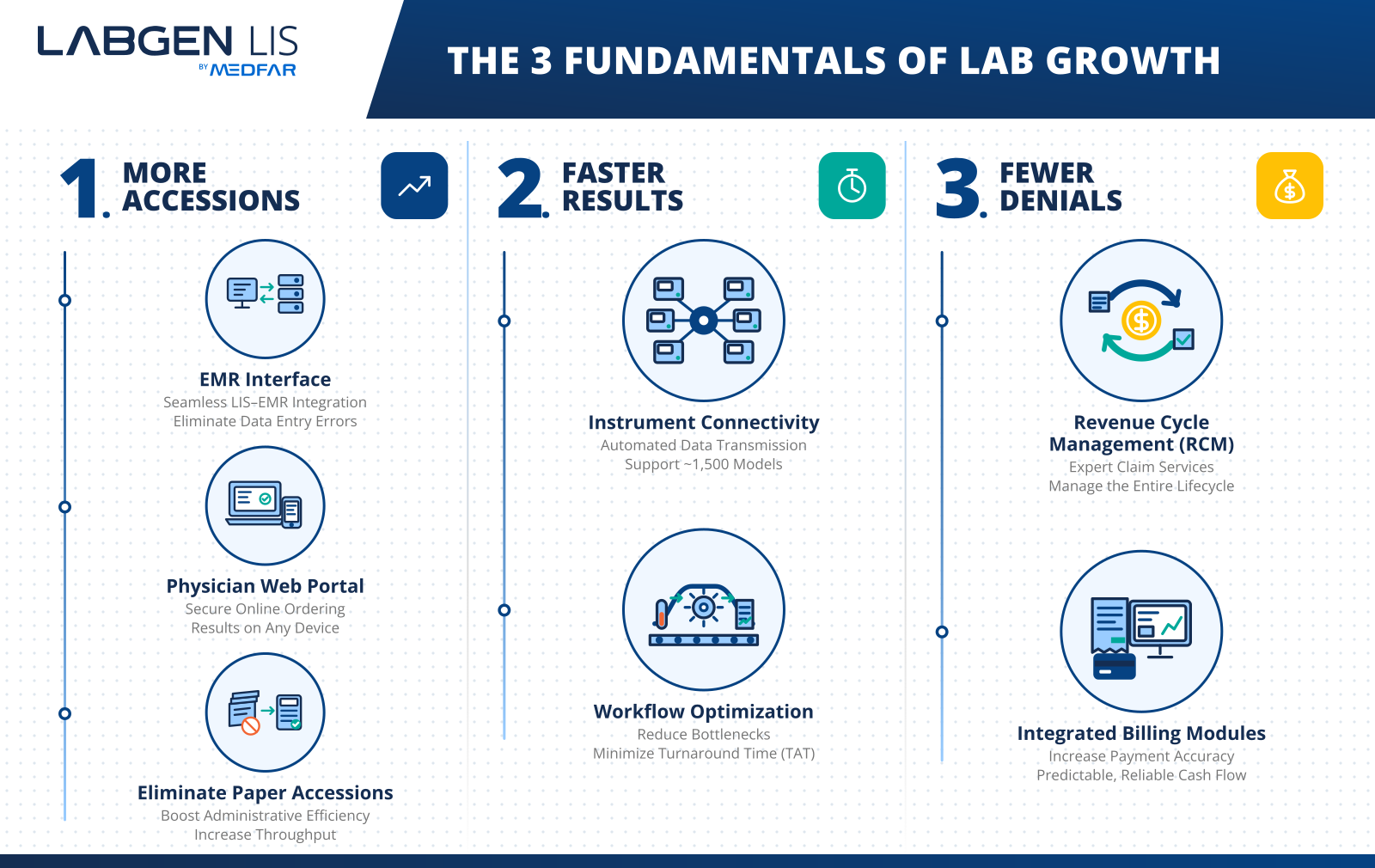
He attributes the ability to grow to three priorities:
- A clear value proposition: know what your laboratory offers and how its service differs.
- An exceptional, aligned team: bring together people you trust across sales, operations, the laboratory and compliance.
- Consistent execution: work through difficult periods and follow through on the plan.
He also emphasizes trust among family members and key managers. When the business faced profitability challenges, they discussed the problem, agreed on a plan and took responsibility for execution.
Use automation to support speed and quality at higher volumes
At the time of the interview, Adam describes Access as serving thousands of patients per day. He connects its investment in automation to the promises made to clients: speed, quality and service.
As specimen volumes rise, manual handling becomes harder to coordinate. Adam discusses automation as a way to improve efficiency and reduce risks such as mislabeled or misplaced specimens. The operational question is how to maintain the service experience as the workload grows.
When selecting technology partners, he looks at the reliability and quality of the technology, alignment with Access’s approach to service, and the responsiveness of support. He describes a thorough evaluation process that can take up to a year for some partnerships.
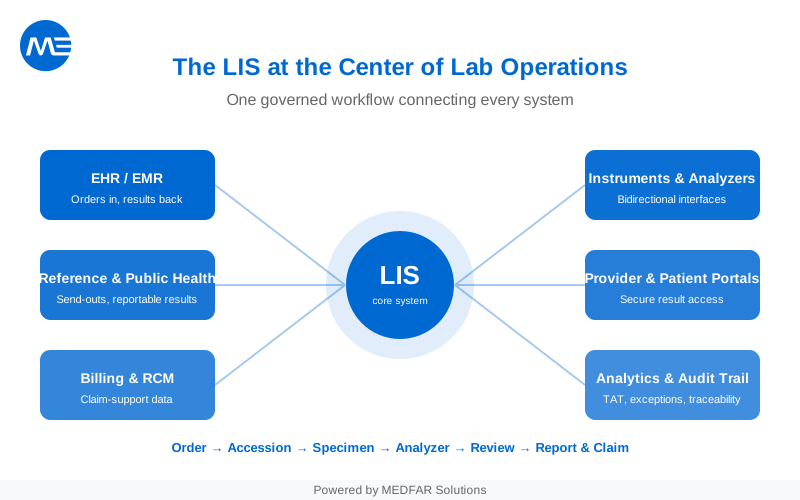
For laboratories evaluating their own infrastructure, explore how a laboratory information system (LIS) supports workflows from ordering through results and performance reporting.
Track daily laboratory KPIs by department
Adam’s KPI discussion offers a practical example of how to manage a growing laboratory. He recommends reviewing operational measures by department because areas such as chemistry, hematology and mass spectrometry have different workflows.
The daily measures he highlights include:
- Total accessions: understand the incoming workload.
- Completed and pending work: track progress and the work still waiting.
- Instrument errors: identify technical issues affecting the operation.
- Downtime and uptime: monitor the availability of equipment.
He separates these operational measures from the financial indicators reviewed by the finance team, including revenue, EBITDA and costs. Daily operational reporting sits alongside weekly, monthly and quarterly reviews.
For more guidance on choosing and defining those measures, read which LIS dashboards and KPIs matter most.
Build resilience through decisions and team alignment
The COVID-19 period tested that ability to respond. Adam recalls testing volume falling by half in March 2020. The team chose to develop a COVID-19 testing method despite shortages of swabs, instruments and supplies, and he reports that testing was live in the first week of April 2020.
The business lesson he draws is about decision-making under pressure: bring the right people together, assess the problem and execute. The episode also explores industry consolidation and the value Adam placed on preserving Access’s brand and service experience.
Recruitment is another part of that resilience. Adam emphasizes the credentials required for laboratory roles, along with communication, initiative and a positive attitude. For roles that allow it, he describes investing in people and helping them develop within the organization.
Future opportunities and advice for lab owners
Looking ahead from the 2025 interview, Adam discusses opportunities in precision medicine and an ambition to expand Access’s geographic footprint. These are perspectives and plans expressed during the conversation.
His advice to new owners is to add value in the diagnostic space, start with the needs of the local community and listen to customers. His leadership advice follows the same principle: listen carefully and work alongside your team when support is needed.
For leaders planning the next stage of their operations, explore LABGEN LIS for established laboratories.
About the guest and host
Adam El Hosseiny shares his journey through the family business as COO of Access Medical Lab in this episode. His experience spans client services, sales, billing and laboratory operations.
Elias Farah is CEO and co-founder of MEDFAR and host of The Lab Entrepreneur, brought to you by LABGEN LIS. The podcast features the experiences of people building and leading businesses in the laboratory industry.
Plan the next step for your laboratory
Watch the full conversation for Adam’s account of building Access Medical Lab. If you are reviewing your workflows, reporting or capacity for growth, contact MEDFAR to discuss your laboratory’s needs.