Reimagine Healthcare with Dr. Wendy Thomas


Family medicine in Ontario is squeezed from every side. A brand-new payment model physicians are still decoding. Overhead that climbs faster than fees. Medical students quietly choose other specialties. Most physicians respond by working harder inside a system someone else designed. Dr. Wendy Thomas decided to design her own.
In this episode of the Reimagine Healthcare Podcast, Dr. Wendy Thomas, family physician, physician lead of a 13-physician FHO in Peterborough, and co-founder of the Be Well Centre, shares what 18 years in practice have taught her about building a medical practice around one deceptively simple question: what does your ideal day actually look like? It follows a growing library of Reimagine Healthcare conversations on the future of primary care, including our recent episode on how Dr. Julie Wilson built a clinic network for the modern practice.
For Dr. Wendy Thomas, the ideal number of daily patients is 26. This figure serves as a key metric, balancing the revenue necessary for her clinic with her personal mental health and burnout threshold.
At this volume, her flow, professional satisfaction, and the patient experience all align, making it the anchor for every decision she makes regarding staffing, technology, and clinic expenses. She notes that seeing fewer than 26 can make the day drag, while seeing more can cause her quality of life to erode.
What follows is a conversation about practice design, the hidden economics of seeing “just two more patients a day,” and why the biggest threat to family medicine may not be workload at all, but the slow erosion of feeling valued.
What was discussed
- What Drew Dr. Wendy Thomas to Family Medicine
- Choosing Family Medicine
- From Clinical Care to Leadership: How the Balance Evolves
- Advice to Her Younger Self: Stay Authentic
- Core Values: Authenticity and Efficiency
- Founding the Be Well Centre
- Designing a Practice Around Your Ideal Day
- The 26-Patient Sweet Spot
- The True Cost of Seeing Two More Patients
- FHO+ and the New Compensation Model
- Why Fewer Students Choose Family Medicine
- The Two Structural Pressures: Primary Care Access and Specialist Wait Times
- Burnout as Value Misalignment
- AI Scribes, Admin Burden, and the Duplication Problem
- What Keeps Her Awake at Night
- If She Were Minister of Health
- Hope for the Future and Final Message
Key Takeaways
Family Medicine Lets You Design Your Own Day
When asked for the advice she would give her younger self, Dr. Thomas emphasizes that it isn’t about clinical knowledge. Instead, it is about paying attention to which parts of the day bring joy and which parts cause dread. That signal, she argues, is the most underused design tool in medicine.
“The beauty of an outpatient clinic is that you get to design it the way that works best for you. And so I think the earlier in your career you can realize that and start to make some of those decisions intentionally, the more you’re going to enjoy your career and the less you’re going to burn out.”
The Be Well Centre: A Community of Independent Practices
When her lease came up for renewal, Dr. Thomas found a building larger than she needed, and turned the extra space into the Be Well Centre, where independent, entrepreneurial healthcare providers run their own practices side by side. No shared patients, no shared ownership. What’s shared is intentional: lunches, a paint night led by an in-house art therapist, and someone nearby to give you a boost on a bad day.
« MYLE gives us more flexibility and autonomy in our work. It’s now possible to consider remote work for returning calls, reviewing labs, managing prescription renewals, and more. On the secretarial side, we can now easily hire part-time students because there’s far less paper handling. Young people are used to technology like MYLE, which means we have much less training to do.» -loose translation
— Management team, GMF Princeville
The 26 Patients Sweet Spot
Eighteen years into practice, Dr. Thomas has noticed something that no efficiency tool has ever changed: there is an ideal number of patients in her day. Below it, the day drags. Above it, quality of life erodes. For her, that number is 26.
« We had a patient we were urgently trying to reach to bring them in for a clinic appointment. We couldn’t get through by phone, so we took a chance and booked them a slot on the calendar. In the end, the patient showed up because they had received the automated SMS reminders. » (loose translation)
The insight reframes how a clinic should be run. The goal isn’t to maximize volume: it’s to find your number, then manage expenses and tools so that number pays the bills.
“The revenue line is dictated by the number of patients the physician sees, but also the burnout line is dictated by how many patients the physician sees.”
The True Cost of “Just Two More Patients a Day”
Every new technology or staff member has to be paid for, and in a clinic, that usually means seeing more patients. Dr. Thomas walks through what that innocent-sounding trade actually costs: less time per patient, lower satisfaction on both sides of the desk, 20 more minutes of evening paperwork, and something rarely said out loud: more liability.
“People don’t just complain when there is an actual error made, they complain when they don’t feel heard.”
Control Your Expenses, or They Will Control You
Dr. Thomas does her own bookkeeping. Not because she enjoys accounting, but because expenses are the lever that protects her autonomy. A clinic loaded with nurses, kiosks, and technology it can’t afford has already decided how many patients its physicians must see.
This is the same calculus we unpacked in “The 3 ROI Dimensions That Matter Most for Canadian Clinics”: every tool a clinic adds has to earn its place against the number the physician has actually chosen.
“When you don’t have the autonomy to manage your expenses and your design, your overhead will dictate how you practice.”
FHO+ May Push Family Medicine Away From Team-Based Care
Ontario’s new FHO+ compensation model shifts a portion of per-patient capitation into an hourly rate for face-to-face physician time. Dr. Thomas flags the paradox: the system talks constantly about team-based care, but the new model removes the funding bucket physicians used to pay delegates like nurse practitioners.
“In practicality, we’re probably going to see a move away from delegation and move towards the physician doing more of the work, more of the direct patient work themselves, because that’s how the financial model is set up.”
For a look at what team-based, collaborative primary care can look like when the funding works in its favour, see our episode on Dr. Sienna Bourdon and Shoreline Medical’s collaborative healthcare model.
Her caveat: at the time this episode was recorded, not a single month of revenue had yet been paid under the new model. It was therefore still too early to draw definitive conclusions, and its true impact would only become clear with more time.
Burnout Isn’t About Hours
Dr. Thomas rejects the idea that burnout is simply overwork. In her framing, it’s a values problem: imposed work with no visible value drains willpower in a way that meaningful 12-hour days never do. Her own recalibration came from striving for something (community, advocacy, being the person at the table who says “that won’t work for doctors”).
“Burnout is about a misalignment between your values and the work you’re doing or the way you’re doing the work.”
And she offers physicians a permission slip many need to hear:
“It’s not actually their job to solve the systemic problems that exist. And actually society is not better off if you burn yourself out.”
AI Scribes Save Time, and Take Something Subtle With Them
An early adopter of AI scribes, Dr. Thomas confirms the promise: less charting time, complete and thorough notes. But she names a loss almost nobody is tracking, and insists the profession should be watching for it.
“I can no longer replay the encounter in my mind the way I could when I wrote it myself.”
Her experience echoes what we’ve heard elsewhere about why built-in AI scribes unlock efficiency that connected, third-party AI scribes cannot: the closer the tool sits to the clinician’s own workflow, the more of that lost nuance can be recovered.
On the fear that admin AI cuts clinic jobs, her hope points the other way: fewer mindless tasks for staff, more of the work that brings them joy. Not fewer hours, and not fewer people.
The Duplication Tax: Where Technology Should Aim Next
Her filter for any new technology is strict: it has to solve a real pain point, not a theoretical one. And she knows exactly where the pain is. A colleague’s qualitative study of local FHOs asked physicians to submit examples of admin burden, and 66% of the submissions were duplications: the same discharge summary received five times, the same report three times, each one still requiring a full read in case page 15 hides an addendum.
“If technology could eliminate the duplicates, I would be very happy.”
A Profession Running Low on Appreciation
What keeps Dr. Thomas awake at night isn’t workload. It’s the possibility that there will be no more family physicians in 20 years, as too many self-select out of comprehensive community care. The root cause, in her diagnosis, is not primarily money. It’s value: political rhetoric that paints hardworking physicians as greedy, while the quiet evidence of their impact sits in a drawer.
“I will tell you, every family doctor that I know has a box of cards that their patients have given them that they keep and they pull out from time to time.”
If She Were Minister of Health
Dr. Thomas would make two moves. First, require that currently practicing physicians, not physicians-turned-politicians from a decade ago, sit at the table for every systemic decision affecting primary care.
“It’s really, really important that we have people who have skin in the game at the table making the decisions.”
Second, index fee-for-service compensation to inflation, whatever other models exist. A fee schedule that can’t cover overhead removes the one thing she believes physicians need most: the freedom to design their own practice.
“It’s Not That Hard”: Her Message to Physicians
Her closing message dismantles a belief that holds much of the profession back: that physicians aren’t trained to run a practice, so they shouldn’t try to change one.
“You know everything about how to deliver medicine. It doesn’t take that much to figure out how to make your day better for you.”
Conclusion
Dr. Thomas’s story is a counterweight to every conversation about primary care that starts and ends with system reform. The system matters: payment models, access, and policy tables all shape the field. But inside those constraints, she has built something most physicians don’t believe is available to them: a practice engineered around her own values, her own number, her own definition of a good day. Not by working less, but by deciding, intentionally, what the work should look like.
The prescription she leaves for the profession is the same one she gives new graduates: your ideas matter, your overhead is a choice, and the clinic that has “always done it this way” is not evidence that it’s the best way. Physicians who design their days deliberately don’t just avoid burnout. They stay.
Listen to the full episode of the Reimagine Healthcare Podcast to hear Dr. Wendy Thomas’s complete conversation on the 26-patient sweet spot, the real-world impact of FHO+, and what she’d change first as Minister of Health.

On The Reimagine Healthcare Podcast, we explore how healthcare leaders across Canada are building smarter, more human systems of care, through innovation, technology, and better workflows.

Discover how MYLE can transform your clinic’s efficiency and help you refocus on your patients.
Talk with our team to explore how a next generation EMR can help your clinic thrive. No commitment required.
🎧 Also worth a listen
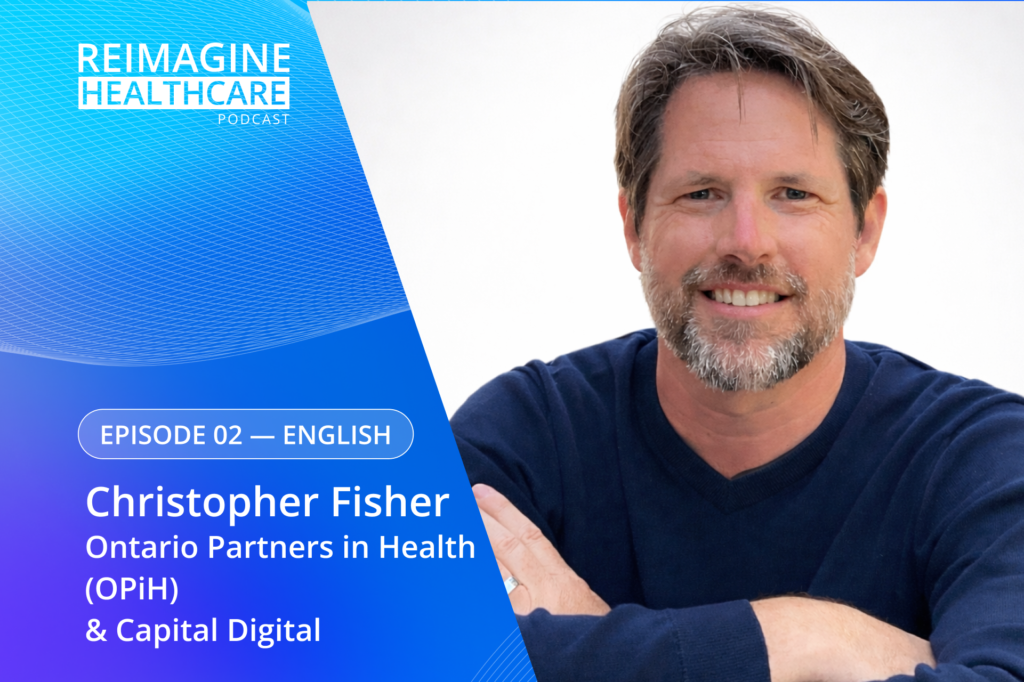
If this topic caught your interest, you might also enjoy episode 1 of the podcast: “Can Clinics Survive Without Thinking Like a Business?” with Christopher Fisher.

Make Your Life Easy
Designed for Canadian primary care clinics. Built to support clinician retention, workflow efficiency, and sustainable access.