Reimagine Healthcare with Dr. Julie Wilson


British Columbia’s primary care system is under strain. Fewer doctors. Higher costs. A generation of new physicians unwilling to take on the isolated, all-or-nothing risk of running a solo practice. Most clinics respond by holding on tighter to the old model. Dr. Julie Wilson did the opposite.
In this episode of the Reimagine Healthcare Podcast , Dr. Julie Wilson, founder of Terra Nova Medical Clinics, shares the story of building one of British Columbia’s largest primary care networks, serving over 250,000 patients with 100+ clinicians, and a structure that looks nothing like the one-doctor, one-assistant office most Canadians grew up with.
Her journey started with a simple observation: Large, collaborative physician groups already existed everywhere else. Kaiser Permanente runs on 4,000 family doctors working together. Australia scaled the same way years ago. The solo model wasn’t surviving anywhere but in British Columbia.
What follows is a conversation about culture, economics, and technology, and why fixing primary care means confronting some uncomfortable truths most people in Canadian medicine would rather avoid.
What was discussed
- What Drew Dr Julie Wilson to Family Medicine
- Building Terra Nova: From One Clinic to 25+
- The Inflection Point and the Case for Scale
- Culture, Values, and What Makes Terra Nova Different
- Defining Success: Patients, People, and Profitability
- Shrinkflation in Medicine and the Cost of Thin Margins
- Competing Without Outside Investors
- The Advantages of Scale
- Technology, Operations, and Keeping Teams Aligned
- Terra Nova’s Biggest Challenges Today
- The Vancouver Division Study: Clinics on the Brink
- The Longitudinal Payment Model: What’s Working and What’s Not
- Navigating Policy, Health Authorities, and Advocacy
- Leadership Style, Core Values, and Tough Trade-offs
- Life as a Physician, Founder, and Mother of Two
- AI in Medicine: A Must-Have
- If She Were Minister of Health
- Hope for the Future and Final Message
Key Takeaways
The One-Person Office is Running Out of Road.
The traditional model, one doctor, one assistant, one clinic, was designed for a simpler time.
This system worked when care was paper-based. As complexity rises, the cracks start to show. At the same time, a new generation of physicians is entering the workforce with different expectations. Fewer are willing to take on the risk of running a solo micro-business without support, coverage, or time off.
“If you can’t switch family doctors because there are no family doctors, and your family doctor’s office does not have a speculum, where are you getting seen? Nowhere, I guess, the emergency department.”
Building a culture first
Ask Dr. Wilson what actually drives the energy across her clinics, and the answer isn’t compensation or technology. It’s clarity of purpose. Every person on her team understands why they’re there: the system needs fixing, and that fixing starts with how people treat each other.
Terra Nova runs on one non-negotiable rule: respect, kindness, and compassion, applied to everyone, always. The perks, unlimited food and drink, team events, a staff Discord community, maternity and paternity leave, extended health and dental, weren’t built because a spreadsheet demanded them. They exist because Dr. Wilson decided it was the right way to run a clinic.
Scale Builds Stability, Specialization, and Career Paths
Larger networks can afford dedicated roles, a person for HR, a person for accounting, a person for IT, instead of forcing one person to juggle all of it, the way small clinics often have to.
That same scale also opens up real career growth for staff, something a single-doctor office rarely has the room to offer.
On top of that, scale brings real economies of scale and stronger negotiating power with suppliers and providers, costs a solo clinic simply can’t match.
“40% of the people that joined the group were for career growth opportunities.‘’
The Secret Sauce Behind the Scale
Ask Dr. Wilson to name the actual ingredient behind that high-energy culture, and she points to a few specific things rather than one big idea:
- A common goal. Everyone across the network is rowing toward the same fix: a healthcare system that isn’t working, made better one clinic at a time. That shared mission gives the day-to-day work a purpose bigger than any single role.
- “We are here for each other.” The culture isn’t built around hierarchy. It’s built around mutual support, staff covering for staff, teams showing up for each other, in a way that a lone-doctor office structurally can’t replicate.
- Access to the founder. Staff aren’t several management layers removed from leadership. Dr. Wilson stays reachable and visible, which keeps decisions grounded in what’s actually happening on the clinic floor.
- Real investment in benefits. The perks aren’t symbolic. Unlimited food and drink, team events, extended health and dental, parental leave, a staff Discord community, all of it signals that the organization backs its people in concrete ways, not just in language.
How Terra Nova Defines Success
Success, in Dr. Wilson’s framing, isn’t measured by a single financial metric. It’s tracked across a few different lenses at once:
- Being a great place to work. If the team isn’t energized and well-supported, nothing else holds up.
- Panel patient growth. How many patients the network can bring into consistent, attached primary care is a direct measure of impact.
- Regional coverage. How many communities and regions Terra Nova can reach speaks to how much of the access gap the model is actually closing.
The Economics Nobody Wants to Talk About
Profit is close to a taboo word in Canadian primary care. Dr. Wilson challenges that discomfort directly. Equipment now costs roughly four times what it did a decade ago, while government fee schedules haven’t kept pace with inflation. That gap leaves most clinics with no contingency fund. When something breaks, financially or otherwise, they simply close, and patients lose their doctor along with it.
‘’The concept of making money in primary care or medicine is considered very negatively. But this also creates a problem, because there’s making money and there’s having contingency.“
Her framing is pointed: what looks like running a business is often closer to clinicians quietly subsidizing the healthcare system out of their own margins.
‘’I hardly even use the word ‘business’ at this point when you’re talking about these kinds of numbers. This is essentially charity that clinicians are giving to society.“
Her message to policymakers: if handing doctors more cash feels politically uncomfortable, then buy them vaccine fridges, autoclaves, sutures, and gloves. Send them a business advisor. The solutions don’t have to be cash transfers, but the fragility must be acknowledged and acted on.
The Longitudinal Funding Model: Where It Works, and Where It Falls Short
The conversation also turns to BC’s newer longitudinal funding model for family physicians. Dr. Wilson sees real value in it for attached, ongoing patient care, but flags a significant gap: it isn’t well suited to walk-in clinics and episodic care. Patients who need occasional, one-off visits rather than a long-term relationship with a single physician can end up underserved by a model built around continuity. For a system that still relies heavily on walk-in access to catch patients who don’t have or can’t get a regular family doctor, that’s a real design tension, not just a technical wrinkle.
The Biggest Challenges that Clinics in British Columbia are Facing
- Post-pandemic hyperinflation, international conflict, and rapid technology change have all driven up costs at once, while patient expectations haven’t adjusted to reflect the budget physicians actually have to work with.
- Equipment costs keep climbing across the board, with no sign of leveling off.
- Pay increases and budgets haven’t kept pace with rising costs, leaving a widening gap between what clinics bring in and what it actually costs to run them.
- Rent, as a share of overhead, has become a real survival risk. For many clinics, it’s now a meaningful factor in whether the business stays open at all.
Dr. Wilson’s conclusion from all of this is direct: at this point, economy of scale isn’t one option among several, it’s the only path that reliably absorbs these pressures without the clinic buckling.
Top Priorities Right Now
With those pressures in mind, Dr. Wilson names three priorities guiding Terra Nova’s next phase:
1. Staying ahead of rising costs by continuing to deliver quality service while still pursuing growth, not choosing one over the other.
2. Being a true service clinic, keeping the patient experience central even as the network scales.
3. Actively seeking out feedback and acting on it, rather than treating feedback as a formality.
Technology as a Force Multiplier
Early technology adoption has been central to Terra Nova’s growth. Dr. Julie built an internal AI assistant, TerraBot, trained on CMPA articles, CSPC guidelines, clinic policies, EHR documentation, and training modules. Staff can query it in real time and get reliable, context-aware answers on the spot.
On the Fear that AI Displaces Healthcare Workers
Dr. Wilson reframes the question entirely. An AI receptionist isn’t replacing a job that existed. It’s picking up the work that was never getting done at all, the rash that never got booked, the screening exam that quietly slipped through the cracks. Once care becomes easier to access, that backlog of unmet need fills the space immediately. AI doesn’t shrink the workload. It reveals how much of it was already there.
‘’How can you imagine that adding an AI receptionist is cutting jobs? That job just wasn’t being done.“
Work that wasn’t getting done, the three-year-old rash the patient never booked an appointment for, the screening exam that was skipped , that backlog fills in the moment care becomes accessible. AI doesn’t take jobs. It makes room for all the care that was always waiting to happen.
If you were Minister of Health, what would you do?
Dr. Wilson’s answer cuts straight to the root: the system can’t fix what it can’t see. Too many funding decisions are made on incomplete data, statistics the average Canadian, or even the average policymaker, has never encountered.
‘’I would spend my time trying to fix the statistical gaps, because if you don’t know what’s happening, how can you solve the problem?“
Before new programs, before cash transfers, before restructuring, measure reality. The average family doctor’s precarious financial situation is a surprise to most Canadians. Making it visible is where the solution starts.
Conclusion
Dr. Wilson’s story isn’t a pitch for scale as an end in itself. It’s a case for building the infrastructure, financial, cultural, and technological, that lets primary care actually absorb the pressure it’s under instead of buckling under it. Solo clinics close because they have no room to fail. Networks like Terra Nova survive because they’re built with slack, shared risk, and technology doing the invisible administrative work nobody had time for anyway.
The bigger point lands past the specifics of any one clinic model. Fixing primary care starts with seeing it clearly: the real costs, the real fragility, and the real backlog of care that’s been waiting, quietly, for someone to make room for it.
Listen to the full episode of the Reimagine Healthcare Podcast to hear Dr. Wilson’s complete conversation on scaling Terra Nova, the role of AI in modern clinics, and what she’d change first if she ran the system.

On The Reimagine Healthcare Podcast, we explore how healthcare leaders across Canada are building smarter, more human systems of care, through innovation, technology, and better workflows.

Discover how MYLE can transform your clinic’s efficiency and help you refocus on your patients.
Talk with our team to explore how a next generation EMR can help your clinic thrive. No commitment required.
🎧 Also worth a listen
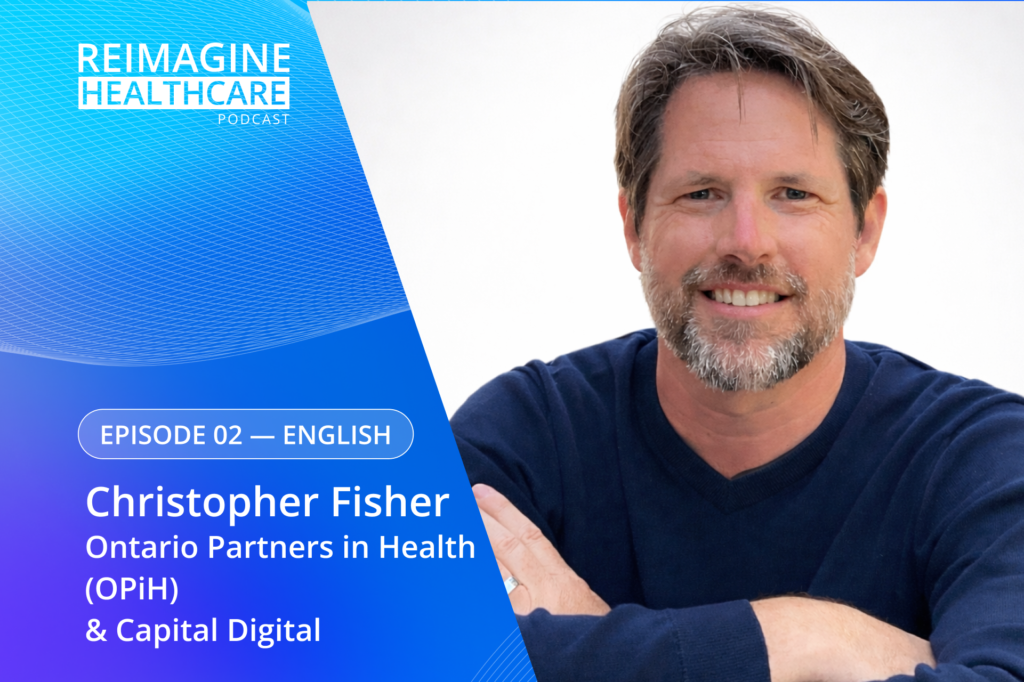
If this topic caught your interest, you might also enjoy episode 1 of the podcast: “Can Clinics Survive Without Thinking Like a Business?” with Christopher Fisher.

Make Your Life Easy
Designed for Canadian primary care clinics. Built to support clinician retention, workflow efficiency, and sustainable access.