
The doctor who left the ER to reinvent access to care in Quebec
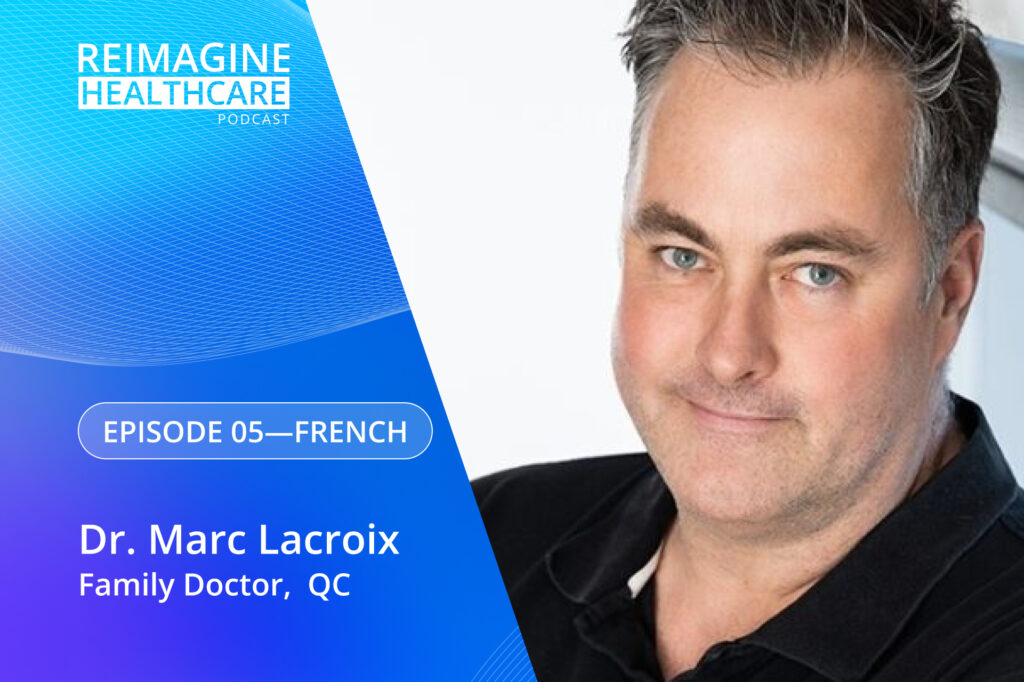
The Reimagine Healthcare Podcast with Dr. Marc Lacroix Note: This podcast episode was recorded in French. Dr. Marc Lacroix spent more than 10 years working in emergency departments across 40 healthcare facilities, a career that involved overnight flights, weekend shifts, and Christmases away from home. Over the years, one reality became increasingly clear: the healthcare system leaves less and less room for the time doctors need to truly focus on their patients. Most doctors eventually resign themselves to it. Dr. Marc Lacroix did the opposite. In 2009, he opened one of Quebec’s first private clinics in Lac-Beauport. Seventeen years later, his group counts 15 points of service, roughly 350 employees, nearly 130 physicians, and average growth of 30% per year. In this episode of the Reimagining Healthcare podcast, Dr. Marc Lacroix, president and founder of Groupe Lacroix, recounts how he went from emergency physician to healthcare entrepreneur, and why he bet his career on a simple idea: time spent with the patient. It all starts with an observation made in the field. In practice, fee-for-service payment pushes doctors to see 10, 15, sometimes 18 patients an hour. Under those conditions, it’s impossible to focus on prevention, to examine, to listen. Dr. Lacroix designed a model where the appointment lasts 30 or 60 minutes, where you get a response within 24 hours, and where the patient once again becomes the center of the decision. What follows is a conversation about the birth of the private sector in Quebec, about the real economics of care and about two-tier medicine, and about what no one dares to say out loud: the public system can no longer afford to offer everything for free. Key Topics Key Takeaways The breaking point wasn’t a crisis, it was an accumulation No dramatic moments. Rather, ten years of wear and tear. Always in the regions, always on a plane, always working weekends and holidays. Dr. Lacroix describes a system he saw as “deflated,” disconnected from its primary vocation: to heal. What tipped him over was the practice model itself. Fee-for-service payment, he says, creates a perverse effect: it rewards volume, not quality. “I won’t see 10 patients an hour. I wanted time with my patient, and the public model wouldn’t allow it. So I invented my own.” Translated from French Time is the real product The model comes down to one phrase: buy time, not privileges. An appointment within 24 hours, but above all a consultation of 30 or 60 minutes. Enough to examine, to ask questions, and to address prevention rather than just the day’s presenting complaint. It’s a lesson brought back from the regions, where he had learned to take his time with his patients, notably among the Indigenous communities of the Côte-Nord. It was the patients who asked to pay Dr. Lacroix worked for six months without pay, allowing patients to reserve a spot at his clinic with a deposit. Demand quickly exceeded his expectations. When annual memberships, averaging $1,000, were eventually introduced, approximately 400 people signed up and paid for a membership. “It was the patients themselves who called me to say: we want to become members of your clinic, can we pay?” Translated from French The elite myth doesn’t hold up Contrary to the image portrayed, his clientele was not wealthy. Not millionaires, not hockey players. Middle-class people from all over Quebec, from the Gaspé to the Saguenay–Lac-Saint-Jean, who decided that their health deserved the same care as a visit to the dentist. “This isn’t elite medicine. It’s an offering that probably speaks to 75 or 80% of the population.” Translated from French Attacked from day one, and ready for it On opening day in Lac-Beauport, he had invited the media. Within 24 to 48 hours, the story had gone province-wide, and so had the attacks. Rather than defend himself, he chose to open a dialogue. His argument: the private sector is not first and foremost about money, it’s about time. Once that idea is understood, he says, the taboos fall away. On The Reimagine Healthcare Podcast, we explore how healthcare leaders across Canada are building smarter, more human systems of care, through innovation, technology, and better workflows. Going from physician to executive, the counterintuitive decision Letting go of the stethoscope for management is far from natural after more than ten years of university. Dr. Lacroix believes he is one of the few in Quebec to have almost entirely left practice to lead. Today he practices at about 10%. The turning point was partnering, in 2016, with Alexandre, a profile that complemented his own. The doctor describes himself as an entrepreneur “more red than blue”: visionary, but weaker on structure and management. “You can’t do 50 hours of medicine a week and 50 hours of management. Otherwise, you get sick.” Translated from French This balance between running a viable business and protecting the quality of care is exactly what Christopher Fisher explores on the Reimagining Healthcare podcast, in Can clinics survive without thinking like a business? Growing through acquisitions to cover the province The second clinic, in Cap-Rouge in 2011, was a gamble: he opened it without a physician, staffed by nurses, before recruiting two family doctors the following summer. Then growth accelerated through acquisitions. The purchase of Avenir MD in Montreal in 2016 nearly doubled the group and anchored it in the western part of the province. Sentinelle Santé, in the Gatineau area, pushed the network further still. On how to build a clinic network at scale, Dr. Julie Wilson recounts her own journey in Scaling Family Medicine: How Dr. Julie Wilson Built a Clinic Network for the Modern Practice. A group with three divisions In 2026, Groupe Lacroix is structured around three divisions. 1. The clinic, with roughly 130 physicians, split evenly between family medicine and specialties, as well as a growing number of nurse practitioners (NPs). 2. Surgery, with two surgical facilities in Laval and Quebec City, offering primarily same-day surgery, as well as procedures in orthopedics, spinal neurosurgery,
Doing Better, Together: How Teamwork Can Strengthen Primary Care
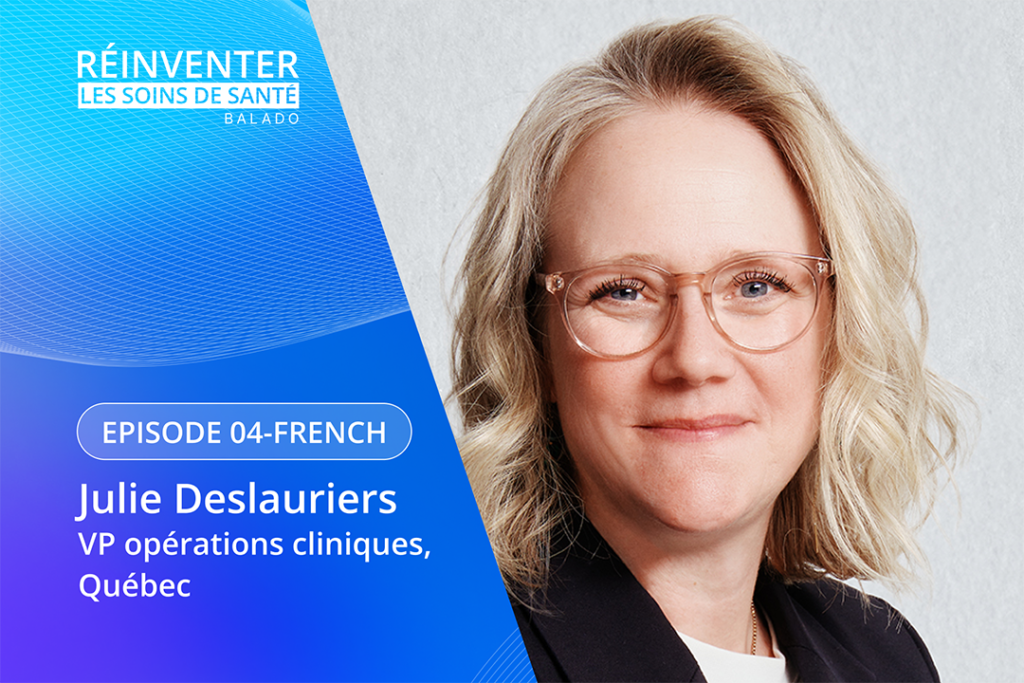
The Reimagine Healthcare Podcast with Julie Deslauriers Note: This podcast episode was recorded in French. Quebec’s primary care system is under growing pressure. Patient needs are increasing, healthcare teams are stretched thin, and significant changes are taking shape, even as many details about how they will be implemented remain unclear. For Julie Deslauriers, the answer is not simply to ask more of already overextended teams. She believes the path forward is different: work better together, reduce unnecessary burdens, and create the conditions teams need to continue delivering high-quality care over the long term. In this episode of the Reimagining Healthcare podcast, Julie Deslauriers, a nurse by training and now Vice-President of Clinical Operations at GSE (Groupe Santé Expert), reflects on what she has learned over 20 years in primary care. Today, she oversees operations across 13 GMF and two specialized clinics in neurology and pediatrics. She describes each of these settings as a small business in its own right, with its own realities, pressures, and challenges. The daughter of an emergency room nurse and a fisherman, Julie sees herself as a blend of both: her mother’s instinct to care for others and her father’s entrepreneurial spirit. That combination took her from a research lab in her twenties to leading a network of clinics, guided throughout her career by a willingness to say yes to the next opportunity. The conversation explores burnout in primary care, the trust required to lead teams through change, and an increasingly important reality: the future of family medicine depends less on a single physician and more on the ability of healthcare teams to work together around the patient. What was discussed On The Reimagine Healthcare Podcast, we explore how healthcare leaders across Canada are building smarter, more human systems of care, through innovation, technology, and better workflows. Key Takeaways A Nurse Who Never Followed a Predetermined Path Originally from the Gaspé Peninsula, Julie Deslauriers became a nurse because of her mother, who spent her entire career in healthcare without ever waking up dreading the day ahead. Julie’s own career, however, quickly took an unconventional path. After completing her bachelor’s degree, she moved into research. Then, in 2006, at the age of 26, she joined Clinique Saint-Louis alongside two physicians she describes as visionaries. Ten years later, she was asked to manage a rapidly growing clinic. She said yes, just as she says she has throughout her career. She attributes some of that willingness to take risks to her father, a fisherman for whom every morning at sea brought a new adventure. Twenty years later, Julie now oversees medical operations across a network of 13 GMF and two specialized clinics. “It’s often the encounter that makes you become the person you are. I really met wonderful people who brought me to where I am.” Translated from French The Elimination of Incidental Fees and the Reorganization of Certain Services In 2017, Quebec’s elimination of incidental fees changed the way some services could be delivered within GMF. Clinics could no longer charge patients certain fees used to help cover costs related to blood draws, nursing staff, or medical supplies. But for Julie Deslauriers and her colleagues, patients’ needs had not disappeared. Their response was to move certain services outside the GMF structure and offer them in a private setting, allowing them to continue funding those services and keeping them available to patients. The goal, she explains, was first and foremost to preserve services patients had come to rely on but that could no longer be financially sustained in the same way within the GMF. “The next day, patients who used to get their blood work done at our place couldn’t anymore, because we couldn’t support it financially. So we privatized so we could pay our staff and keep the service.” Translated from French Primary Care Is Running Out of Steam For Julie Deslauriers, the reality is clear: patient needs are increasing at a time when primary care teams are already under significant strain. The population is aging, cases are becoming more complex, and healthcare professionals are facing increasingly heavy workloads. In that environment, simply asking teams to do more cannot be the answer. The more important question is how they can work better: collaborate more effectively, distribute responsibilities more appropriately, and remove unnecessary burdens while protecting both the quality of care and the people delivering it. “I think we have to think about working better, because yes, the teams are out of breath. If we do nothing, we’ll blow out primary care.” Translated from French Kindness as a Driver of Collaboration In organizations under pressure, the quality of working relationships becomes a genuine performance issue. For Julie Deslauriers, communication, mutual support, and kindness are not secondary considerations. They directly influence a team’s ability to stay engaged, work together effectively, and navigate periods of change. It is an important reminder that in healthcare, where operational pressures are intense and teams are constantly being asked to adapt, effectiveness is not only about processes. It also depends on the environment in which professionals are expected to work together. “If each of us were a little more benevolent with the people around them, I think we could make major changes.” Translated from French From Paper to Digital: 8,000 Documents a Week Julie Deslauriers has lived through every stage of healthcare’s digital transition: from paper charts to EMRs, and then from one EMR to another. She remembers a time when full-time staff members did little more than pull paper charts for the following day’s appointments. The transition to digital happened quickly, in less than a decade. And in her experience, it was not top-down directives that drove adoption. It was the clinical champions who embraced new tools early and then helped their colleagues adapt. But digitization did not eliminate one of the biggest challenges facing clinics: the sheer volume of information that has to be processed. During the episode, the conversation touches on an average of roughly 8,000 documents received by a GMF
Elias Farah, CEO and co-founder of MEDFAR discusses hypergrowth on the Hypercroissance podcast!

Our CEO recently appeared on Hypercroissance with Antoine Gagné, a podcast dedicated to business development and hypergrowth in Quebec. Elias discusses MEDFAR’s humble beginnings in 2010 to its current growth to $40 million ARR, as well as our ambitions to expand internationally and hit a $5 billion valuation by 2030! (Interview in French only) Watch the full video of the conversation Listen to the podcast audio