Reimagine Healthcare with Dr. Maryam Zeineddin


With fixed rent and set salaries, clinics see fee increases of only 1% to 2% every three years, and have no power to set their own prices.
That is the arithmetic every physician-owned clinic in British Columbia is quietly running, and for a growing number of them, the math no longer works. Most doctors respond by leaving ownership behind, joining a health authority, or handing the keys to a corporate buyer. Dr. Maryam Zeineddin decided to stay, speak plainly about the money, and fight to change the model itself.
In this episode of the Reimagine Healthcare Podcast, Dr. Zeineddin, family physician and co-founder of Ambleside Medical Centre, past president of BC Family Doctors, and co-founder of the not-for-profit Zili CARE, shares more than twenty years of lessons from owning a practice in one of Canada’s most expensive cities for real estate. She took over a primary care practice the day after completing her residency, built a clinic that now runs five full-time physicians on 1,500 square feet, and contributed to negotiating BC’s Longitudinal Family Physician (LFP) payment model. Furthermore, in 2025, Dr. Zeineddin was named Woman of the Year in the Change Maker category by BCBusiness.
Her insight is uncomfortable and cultural: family doctors have been trained to be so altruistic that they cannot bring themselves to talk about money, and that silence is helping to bankrupt primary care.
What follows is a conversation about the real economics of a clinic, how a grassroots “coup” rewrote how family doctors get paid, and why prevention, burnout, and belonging are all part of the same system.
Key topics
- Taking over a practice the day after residency
- The real economics of a physician-owned clinic
- Hidden costs: overhead, locums, and the end of PPN
- Corporate-backed clinics: solution or threat?
- Why doctors struggle to talk about money
- How frontline doctors reinvented their own payment model
- Prevention, team-based care, and the missing business model
- Burnout, sabbaticals, and Zili CARE
- AI in the clinic
- If she were health minister for a day
Key Takeaways
The Economics Nobody Wants to Talk About
A recent study by the Vancouver Division of Family Practice found that 40% of the clinics it examined were barely covering their costs, even with physicians contributing 25% of their income toward overhead. Dr. Zeineddin has lived that reality. Her clinic sits in West Vancouver, one of the highest commercial real estate municipalities in the province, where none of her staff lives, so some commute and some work remotely from Vancouver Island.
The problem, she says, is structural. Rent is fixed. Salaries are fixed. EMR costs, medical supplies, and insurance are fixed. Fee increases arrive at 1% to 2% every three years, well below the rising cost of living. After trimming every variable cost she can, her clinic still takes 30% off the billings of its physicians just to keep the lights on, and it pays locums 80% of their billings, which means every locum shift is a loss. To better understand where this money actually goes, the article The 3 ROI Dimensions That Matter Most for Canadian Clinics breaks down the numbers behind clinic economics.
“Every time we have a locum, we actually lose money, which is unbelievable actually that we’re keeping things afloat as we speak.”
You Run a Business, But You Cannot Set the Price
The phrase “physician business owner” hides a contradiction. Doctors carry all the risk of a small business, a flood, a rebuild, a contingency they pay for out of pocket, but they have almost none of the levers a business owner normally holds.
“What kind of business do you ever run where you can’t set your own fees, you don’t even take new patients? We’re kind of strapped in some weird ways.”
That squeeze has consequences for patients. Dr. Zeineddin argues the real fix is targeted, municipality by municipality: recognize that inner-city commercial space is expensive too, and let governments help with property tax, clinic build-out, or the cost of EMRs and secure networks rather than expecting doctors to absorb it all.
When the Government Pulls the Rug: The PPN Story
Few examples capture the hidden cost of running a clinic better than the disappearance of PPN, the secure network British Columbia clinics relied on. When the government wound it down, the bill for replacing it landed squarely on business owners.
Firewalls. A new secure network. A phone company. IT setup. Thousands upon thousands of dollars, absorbed by clinics that never asked for the change and had no say in it. It is the kind of invisible, downloaded cost that never shows up in a fee schedule but quietly erodes a practice’s ability to survive.
The Cultural Taboo Around Doctors and Money
Perhaps the most personal thread of the conversation is Dr. Zeineddin’s admission that her own values worked against her. Family physicians, she says, are trained almost subconsciously to believe that good care means being endlessly altruistic and never thinking about money. As a younger doctor, she could not bring herself to charge for private forms or missed appointments, even though the time was hers to bill.
“It is my own core values that have been stopping me from owning the fact that I am a business owner.”
Her husband, a dentist whose clinic sits two kilometres away, showed her another way: he ran his practice as a business, without apology. Being named a Change Maker by BCBusiness, embarrassing as it first felt, became a turning point: public permission to say out loud that a physician can care deeply about equity and still run a viable, even profitable, practice. This tension between running a financially viable practice and protecting quality of care is exactly what Christopher Fisher explores on the Reimagine Healthcare podcast, in Can Clinics Survive Without Thinking Like a Business?
Before LFP, You Were Bound to Fail
To understand why the payment model had to change, you have to understand what fee-for-service did to a family doctor’s day. A patient arrives with five problems. The physician is paid a single age-based fee, roughly thirty to forty dollars, no matter how long the visit takes. So doctors saw six patients an hour, ten minutes each, fell an hour behind by default, and then faced hours of unpaid paperwork at night with no AI scribe to help.
“You go to work every day and you’re bound to fail. You’re bound to fail to be on time, you’re bound to fail to address all of your patients’ needs.”
The “complexity” fees the system layered on top only sharpened the inequity. They rewarded a narrow list of conditions, what Dr. Zeineddin bluntly calls “old white man’s illnesses,” diabetes, COPD, chronic kidney disease, cardiovascular disease, while women’s health, chronic pain, and mental health went unrecognized.
The Grassroots Coup That Rewrote the Rules
The Longitudinal Family Physician model, introduced in BC in 2023, was not handed down from the top. Dr. Zeineddin describes it as a “coup,” built by burnt-out physicians who were, in her words, on the brink of do or die.
A five-person negotiating team, herself among them, went to the table backed by something their chief negotiator never fully saw: an army of allies. They were connected to other organizations, to the BC College of Family Physicians, to grassroots doctors, to media and patients who could apply pressure the negotiators could not apply themselves.
The tactics were deliberate, and sometimes theatrical. To force a reckoning on women’s health billing, where a physician lost money doing a vaginal exam unless a Pap test was attached, they made the discomfort impossible to ignore.
The result reshaped how time is valued. For the first time, family doctors were paid by the hour for patient care, including the indirect work, such as paperwork, that fee-for-service had always left unpaid.
A Real Win, and the Problems It Left Untouched
Dr. Zeineddin is proud of what LFP achieved, and clear-eyed about what it did not.
“It did bring an extra thousand physicians into longitudinal care in British Columbia. That is huge.”
But the walk-in clinic problem was not solved. Hospitalists did not flood back into longitudinal care. And the complexity calculations still lean on that outdated model, requiring doctors to see complex patients three times a year even when good management has made them stable, while ignoring mental health almost entirely.
“Everything in our healthcare system is so band-aid. It’s like, we’ll just deal with that when the fire comes up.”
Prevention Is Not the Treadmill and the Vitamins
Ask people what prevention means and they say exercise and vitamin B12. Dr. Zeineddin rejects that framing entirely. Prevention, to her, is something deeper and harder to bill for.
“Prevention is understanding yourself as well as you can in order to make good decisions for yourself.”
This is where longitudinal care becomes irreplaceable. A doctor who knows a patient’s family, work, finances, and history can hear “I’m just tired” and investigate both the thyroid panel and the mental load at home. Episodic care sets a broken bone or treats a UTI, but it cannot see the whole person. And the whole person, she insists, is one thing, not three connected things. Dr. Frédéric Picotte shares this same vision of decentralized, deeply human primary care in the episode Building the Future of Healthcare from the Ground Up.
“People always say it’s connected. I don’t even say that anymore. I say it’s one system. One.”
Team-Based Care Has No Business Model
Everyone agrees the future is team-based care. The problem, Dr. Zeineddin points out, is that the payment models actively discourage it. Share a practice and your complexity fees drop. Bring in a nurse, a social worker, or a mental health worker, and there is no financial mechanism that makes collaboration pay.
The system stays siloed and fragmented, a referral out to the specialist and back, while patients are told to advocate for themselves and handed lab results they cannot interpret. Until a proper business model is designed around LFP and the other payment models, team-based care will remain a slogan rather than a structure. A non-profit, team-based care model already exists in British Columbia: Dr. Sienna Bourdon describes one in Shoreline Medical’s Collaborative Care Model.
Burnout and the Warrior Who Gets Shot
Dr. Zeineddin speaks openly about two major burnouts, chronic back pain, and going on antidepressants, and she is not alone: a Canadian Medical Association survey found roughly half of family physicians reporting burnout. The cause, she says, is not just volume. It is the mental load of longitudinal care that never switches off, checking labs on vacation, overseeing a whole panel, carrying responsibility with too little agency and too few resources.
Even in the first week of her sabbatical, when this episode was recorded, she admits she still checks her labs out of sheer habit. Her advice to physicians, especially those of her own Gen X generation, is a warning against martyrdom.
“Do not think you are a warrior. Because warriors do get shot and we have to take them out of the battlefield. You cannot take care of your patients if you cannot take care of yourself.”
Zili CARE and the Idea That Belonging Is Medicine
Founded in 2017 amid a wave of health misinformation, Zili CARE began as a public conference at the Vancouver Convention Centre, three years running, giving patients trustworthy information about prevention, trauma, menopause, and mental health. It has since grown into a movement, with a recent event, “Beyond Wellness: Belonging, Authenticity, and Care,” featuring a conversation with Dr. Gabor Maté and a panel spanning policy, nature prescribing, meditation, and Indigenous research on matriarchy.
Her vision for what comes next is a freemium model for proactive preventive care: physicians who practice integrative, trauma-informed medicine, free to walk in the door, sending referrals back to family doctors so patients learn to navigate their own health. The next event is planned for Vancouver in 2027.
“Community is, and belonging is, medicine.”
AI in the Clinic
Dr. Zeineddin’s clinic uses an AI scribe, and the relief is real: she can finally listen to a patient without scrambling to remember every word. She would welcome more AI in the integration of forms and referral systems, but she draws a careful line. She worries about physicians outsourcing their clinical judgment. For a doctor of twenty years, leaning on AI is manageable. For a new graduate, she fears it could hollow out the skill before it is ever built.
What She Would Change as Health Minister
Asked what she would fix first, Dr. Zeineddin does not start with a policy. She starts with who is in the room. Too many health decisions, she argues, are made without a single healthcare provider present.
Her fixes are practical:
- Put a clinician at the deputy minister table. Not necessarily a physician, but a nurse or anyone who knows what actually happens in a hospital and a community, and who understands how changing one policy ripples through everything else.
- Think beyond the next two years. Anticipate problems like rural emergency backlogs and after-hours access instead of band-aiding them once the fire starts.
- Revisit the digital health promises. Fifteen years of digital healthcare solutions, she says, have gone nowhere.
On why reforms like e-referrals move so slowly, her diagnosis is blunt: governments are cautious due to money spent on projects that were never delivered, and, facing tariffs and economic pressure, they will not invest in anything whose success they cannot measure. Her message to every EMR vendor and digital health innovator follows directly from that.
“Show the measure of success so simply and so clearly that they can’t say no.”
Conclusion
Dr. Zeineddin’s story is really the story of a contradiction Canadian primary care has never resolved. We ask family physicians to run businesses without the power to price them, to absorb costs they never chose, and to do it all while pretending, out of culture and conscience, that the money does not matter. That silence is not virtue. It is a slow leak, and the clinics closing across the province are the evidence.
The way forward she points to is not martyrdom or corporate takeover, but a system honest enough to fund the thing it claims to value: doctors who know their patients as whole people, teams built around a workable business model, and technology that lightens the load without replacing the judgment behind it. Prevention, sustainability, and belonging turn out to be the same project.
Listen to the full episode of the Reimagine Healthcare Podcast to hear Dr. Maryam Zeineddin’s complete conversation on the economics of physician-owned clinics, the grassroots fight behind the LFP model, and why she believes belonging is medicine.

On The Reimagine Healthcare Podcast, we explore how healthcare leaders across Canada are building smarter, more human systems of care, through innovation, technology, and better workflows.

🎧 Also worth a listen
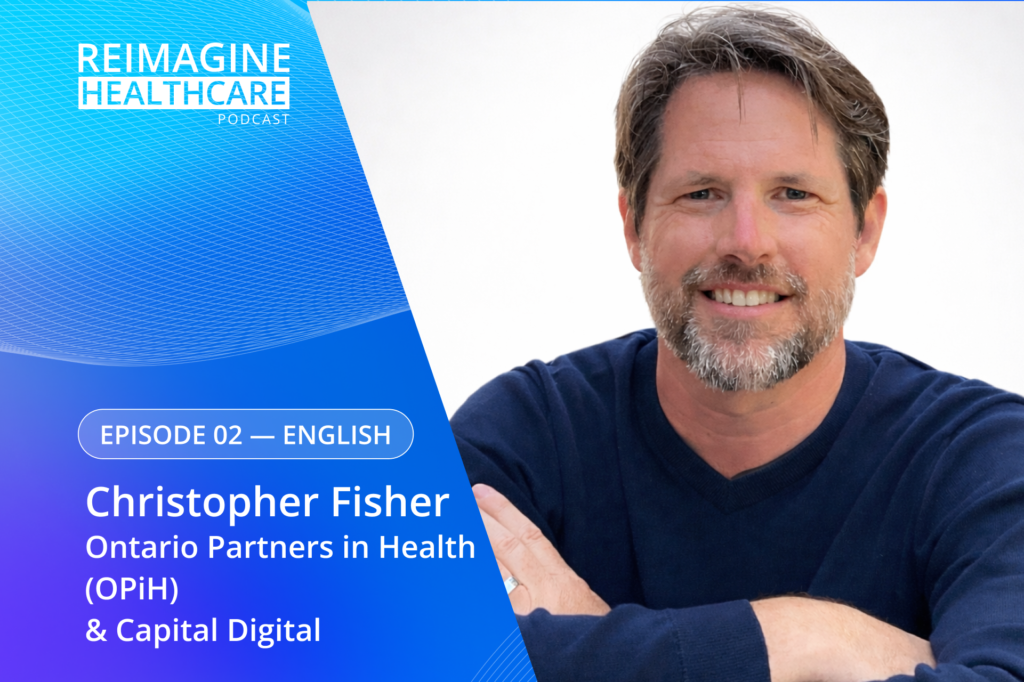
If this topic caught your interest, you might also enjoy episode 1 of the podcast: “Can Clinics Survive Without Thinking Like a Business?” with Christopher Fisher.

Make Your Life Easy
Designed for Canadian primary care clinics. Built to support clinician retention, workflow efficiency, and sustainable access.